29 September 2026 · 4 min
Updated on 03/11/2026
The date above follows the editorial calendar; the content was revised on the update date.
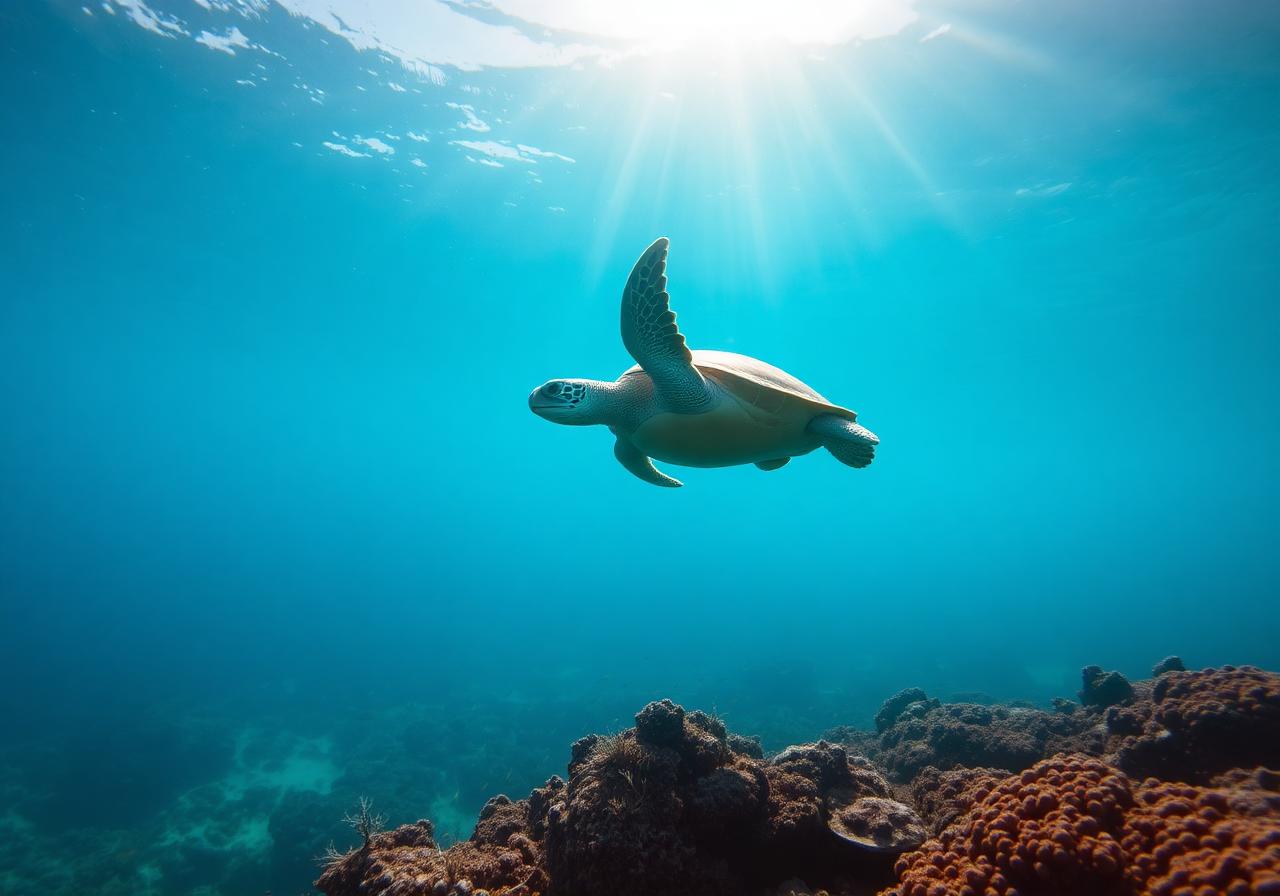
Discovering marine wildlife comes with no guarantee of an encounter, and without trying to encourage an approach. The National Park distinguishes between five turtle species that frequent Caribbean waters and three that come to lay their eggs in Guadeloupe. For turtles and cetaceans alike, protection takes priority over the photograph.
Understanding the functions of a habitat, not just looking for a silhouette
To prepare for a marine outing, replace the question “Where can I see an animal?” with “What does it come to this habitat to do?”. The National Park states that five species of sea turtle feed in Caribbean waters, while three come to lay their eggs on the beaches of Guadeloupe: the leatherback turtle, the green turtle and the hawksbill turtle. This distinction between feeding and reproduction changes how you read the landscape. The beach is not simply the edge of a space where turtles live; it plays a part in another stage of their life cycle. Likewise, seeing a turtle at sea does not tell you where it lays its eggs. Before an outing, ask your contact to explain these functions and their differences. You will gain a framework for understanding the places without needing an address for an encounter or the location of a nest.
Beneath the surface, a presence that cannot be summed up by sight alone
Agoa’s resources distinguish between toothed cetaceans, such as dolphins, and baleen cetaceans, such as the humpback whale. They also remind us that these mammals breathe at the surface: a blow is an expulsion of air after holding their breath. What visitors glimpse is therefore just a moment in a life that remains largely invisible from a boat or the shore. A seemingly empty sea does not mean there are no animals, any more than a brief appearance is enough to explain their activity. To enrich your outing, take an interest in how knowledge is gathered: how is a species identified, what can be stated from an observation, and what uncertainties remain? This approach makes room for explanation and doubt, rather than expecting every silhouette to deliver an immediate spectacle or certainty.
Reading a habitat map without treating it as a promise
Agoa publishes habitat modelling studies based on observation data. Their aim is to link the possible presence of species to environmental conditions, then help explain their distribution on a wider scale. An area considered favourable is therefore not an appointment with an animal. Differences between species and the variations studied mean that a scientific map cannot be turned into a universal calendar for outings. If a professional shows you these documents, ask what they explain about the environment rather than what encounter they guarantee. Afterwards, also remember what you learnt without an animal in view: a distinction between species, the role of a habitat or the limits of observing from the surface. This gives you a way to recount your experience that depends neither on getting close nor on the number of sightings.
Encountering a turtle in the water
Keep your distance, do not touch the animal and do not pursue it. Leave it clear space to surface for air. Do not offer any food or block its movement for a photograph. Previously listed spots described as reliable and distances wrongly attributed to a marine mammal charter have been removed.
A turtle or a nest on the beach
Do not search for nesting turtles by shining lights along the shore, or organise a group approach around a turtle. Avoid flash photography, lights and noise; touch neither eggs nor hatchlings. Respect protected areas and seek advice from the local conservation network about supervised observation or reporting a sighting. This guide does not publish nest locations.
Cetaceans: choosing responsible observation
For a boat trip, ask the operator about the rules that apply in the Agoa sanctuary, their approach practices and the conditions of the outing. Avoid promises of encounters or swimming with the animals. From the coast, binoculars allow you to observe without approaching, but no viewpoint or time of year guarantees a whale sighting.
Learning even without an encounter
The National Park’s resources explain species and their habitats. Understanding the environment in this way can make an outing interesting, even without an animal in sight. Previous claims about a universal season, animals visible from the villas and the absence of danger from sharks have not been retained: they did not help visitors make reliable, cautious choices.
Reference sources
Stay in Grande-Terre
Our homes in Le Moule and Saint-François.