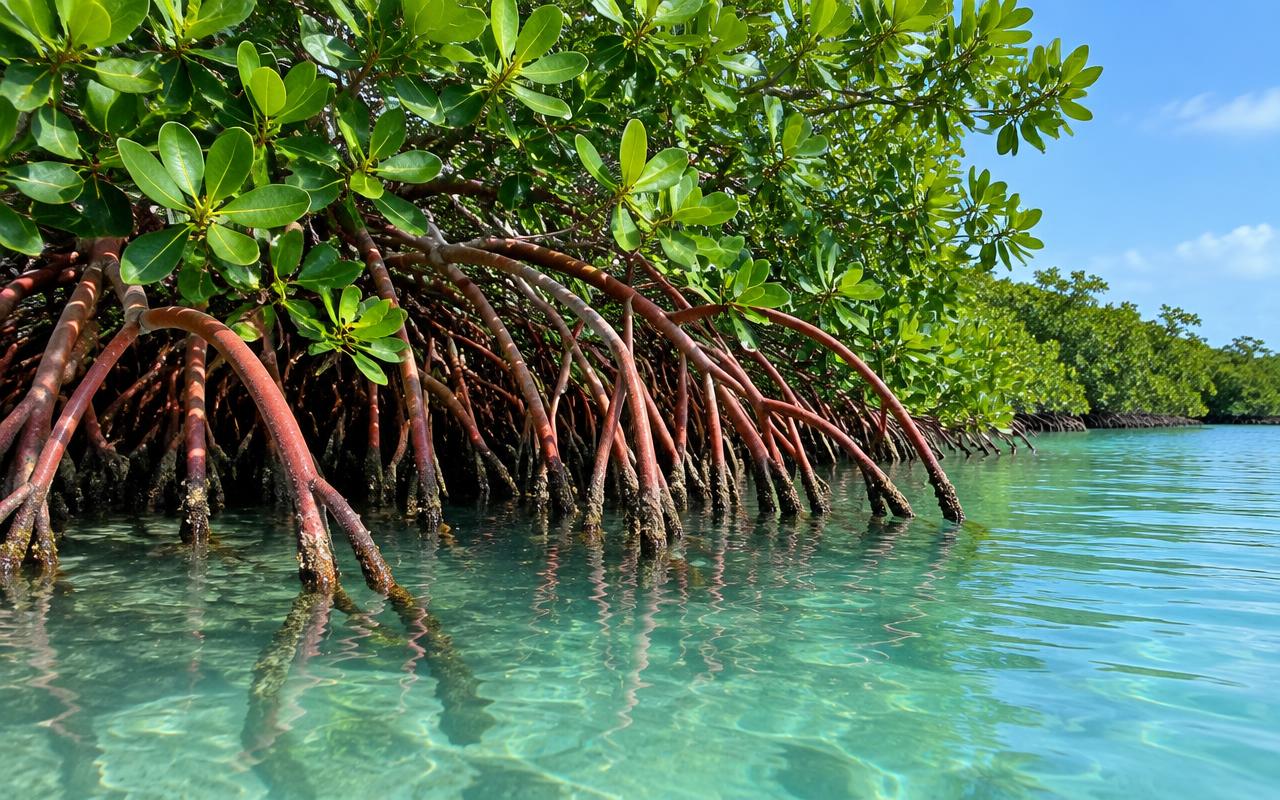
Generated illustration — not a depiction of a specific location
16 March 2026 · 4 min
Updated on 03/11/2026 · Original article: 23/02/2026
The date above follows the editorial calendar; the content was revised on the update date.
A silhouette perched on a branch, a movement on the water’s surface, then a wait: birdwatching comes into its own through these small clues. The wetlands of northern Grande-Terre offer a starting point for understanding habitats, particularly around Grand Cul-de-Sac Marin. This guide teaches you to watch behaviour before looking for a name, take notes without approaching and choose a nature outing, without promising a particular species or a time slot for sightings.
Read a habitat before looking for a name
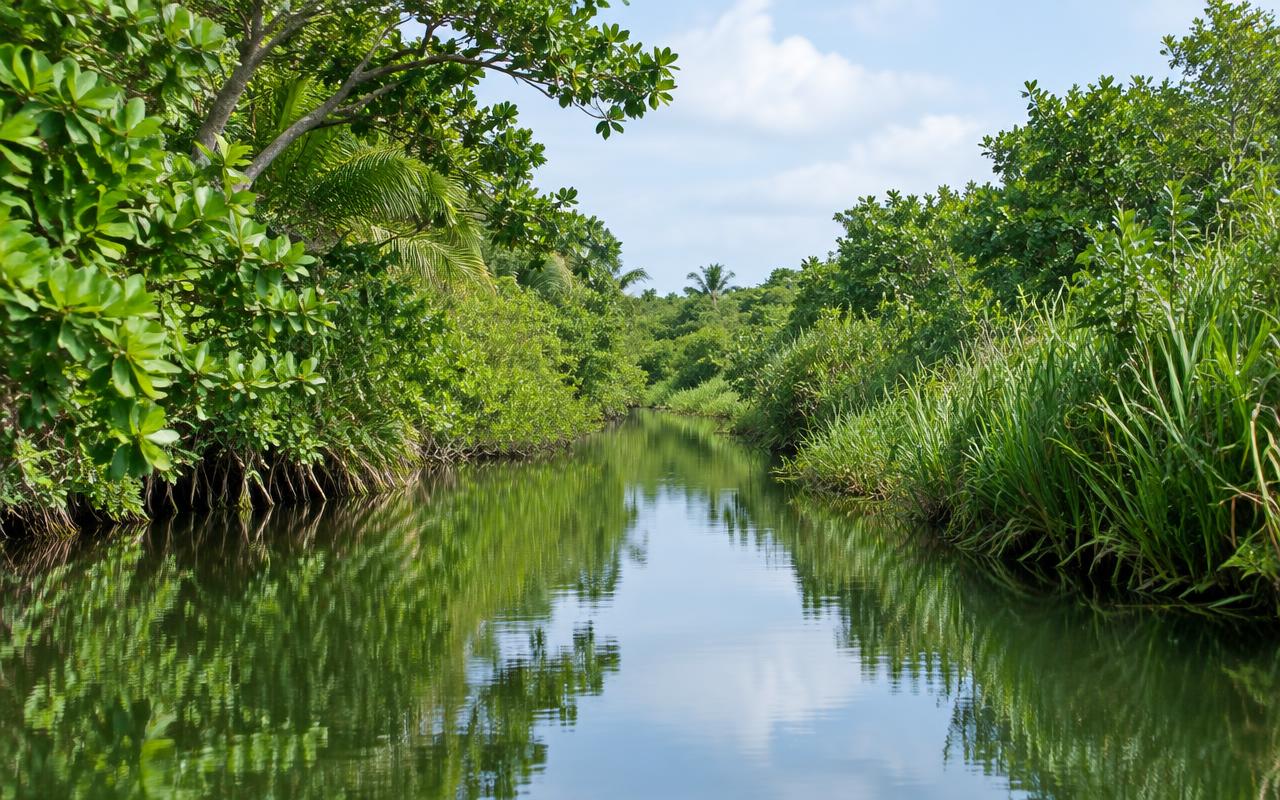
In northern Grande-Terre, the interest of a birdwatching session often begins before the first bird appears. Look at how the landscape is arranged: open water, a fringe of vegetation and a wooded edge do not offer the same resources. From a confirmed public access point, choose just one of these habitats and let your eyes adjust to it. You will notice movements more easily than if you constantly switch from one place to another.
The wetlands of Grand Cul-de-Sac Marin provide a useful key to understanding the landscape: birds find places here to feed, rest or breed. These functions are not all visible at the same time. An occupied branch or repeated flights over the water can already raise an interesting question, without allowing you to conclude that nesting is taking place.
Watch behaviour, then compare clues
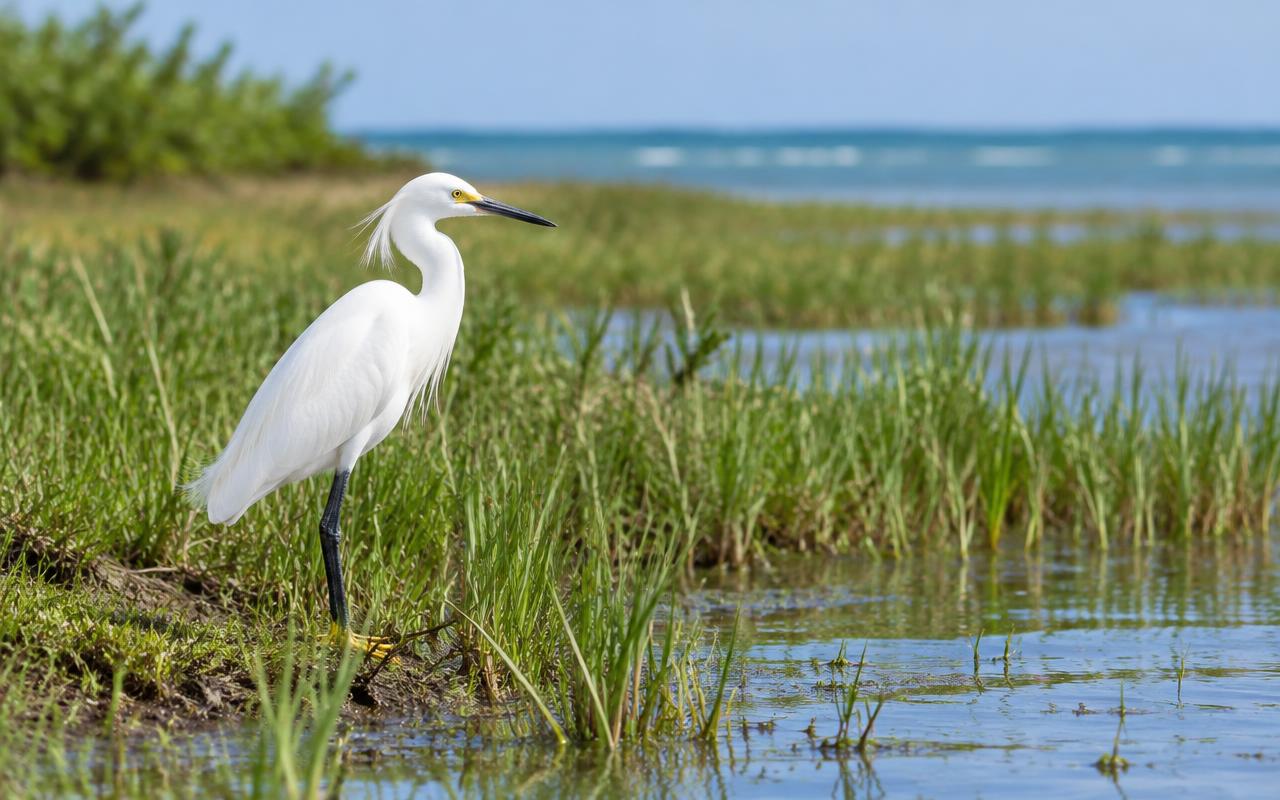
Start by describing what the bird is doing. Is it walking in the water, remaining still on a perch or picking something off the surface? Then note its relative size, the shape of its beak and the position of its legs. This method lets you keep a useful record even if you cannot make out the colour of its plumage. It also avoids turning a distant silhouette into an overconfident identification.
In a group, share the roles: one person watches through binoculars while another writes a few words. Compare your impressions after the bird has left, without moving closer to settle the question. A very simple sketch can be more informative than an excessively enlarged photograph. Keep what you actually saw separate from what you assume; you can then discuss these notes with a naturalist or consult an identification resource.
Build an outing around a question
An outing becomes more rewarding when it addresses a specific curiosity. You might, for example, wonder how birds use the boundary between water and vegetation. The aim is not to compare species counts between sites, but to understand behaviour in context. Stay at the same spot for as long as it allows unobtrusive observation, rather than chasing every movement.
Before choosing a guide, explain what you hope to discover. Ask whether they offer stops to interpret what you see, how they choose their observation points and how they respond when an animal shows signs of disturbance. With children, have them draw a habitat and the places the birds use, without challenges to get close or collect photos. On your return, a few notes on the habitat and behaviour will provide a more personal memory than a copied species list. An uncertain sighting can become the starting point for further reading, rather than a frustration to resolve on the spot. Also keep a brief description of the spot you observed so that you can put your notes in context.
Focus on habitats, not a checklist of sightings
The National Park describes the importance of the bay’s wetlands for birdlife. Choose an area open to the public and observe what presents itself: edges, water, vegetation and behaviour. A species being mentioned in a nature resource does not mean it will be visible from your stopping point.
Prepare for a simple birdwatching session
Binoculars and a notebook let you record silhouettes, beaks, plumage and ways of moving. Compare your notes afterwards with a reliable nature guide. Keep your distance and accept uncertainty in identification: do not approach a nest to confirm a detail or share sensitive locations.
Do not attract birds
Do not use food or recorded calls to encourage birds to approach. If a bird becomes alarmed or moves away, step back. Islets and nesting areas may be subject to restrictions; respect them and ask your guide how they avoid disturbance. Do not land to get a better photo.
Draw on local knowledge
A nature outing can help you read habitats and understand species protection. Ask which habitats are visited, which rules apply and how the outing adapts to the weather. The absence of spectacular sightings is not a failure: understanding a living landscape is already a discovery.
Reference sources
Stay in Grande-Terre
Our homes in Le Moule and Saint-François.