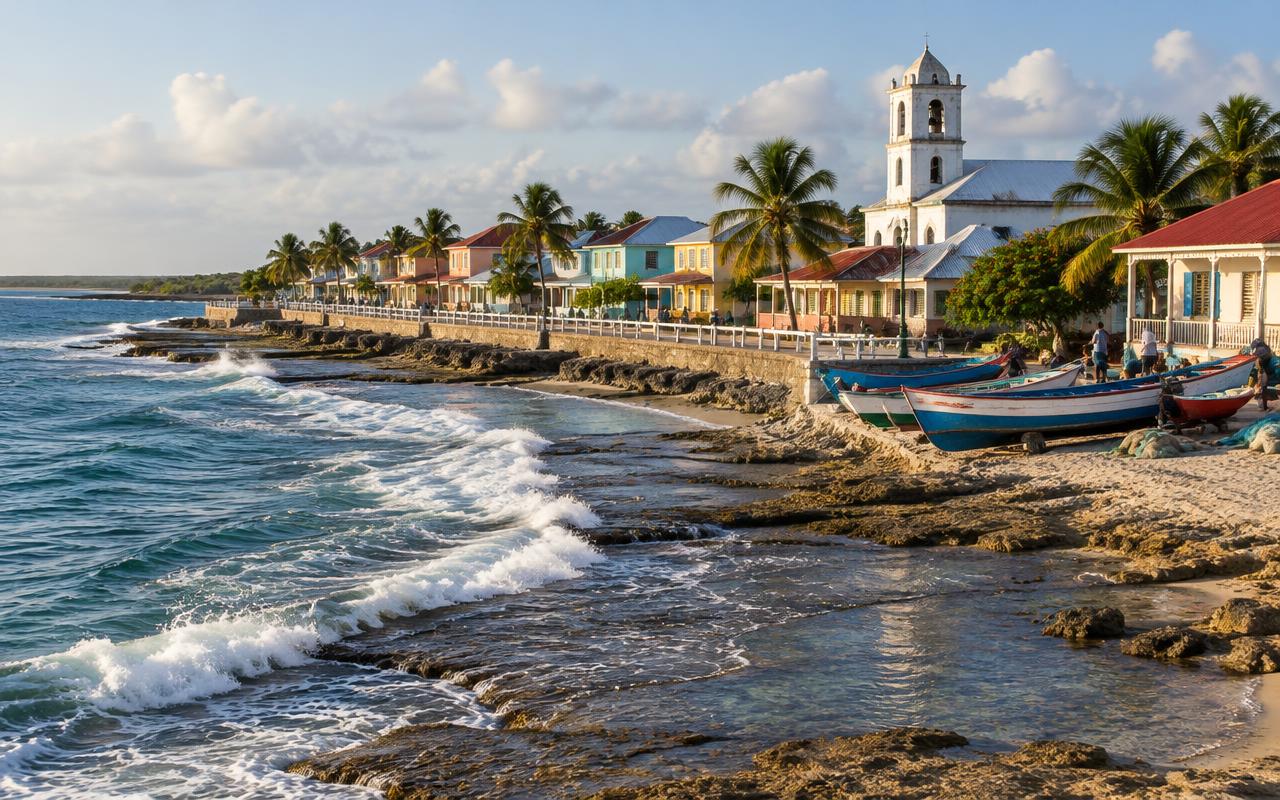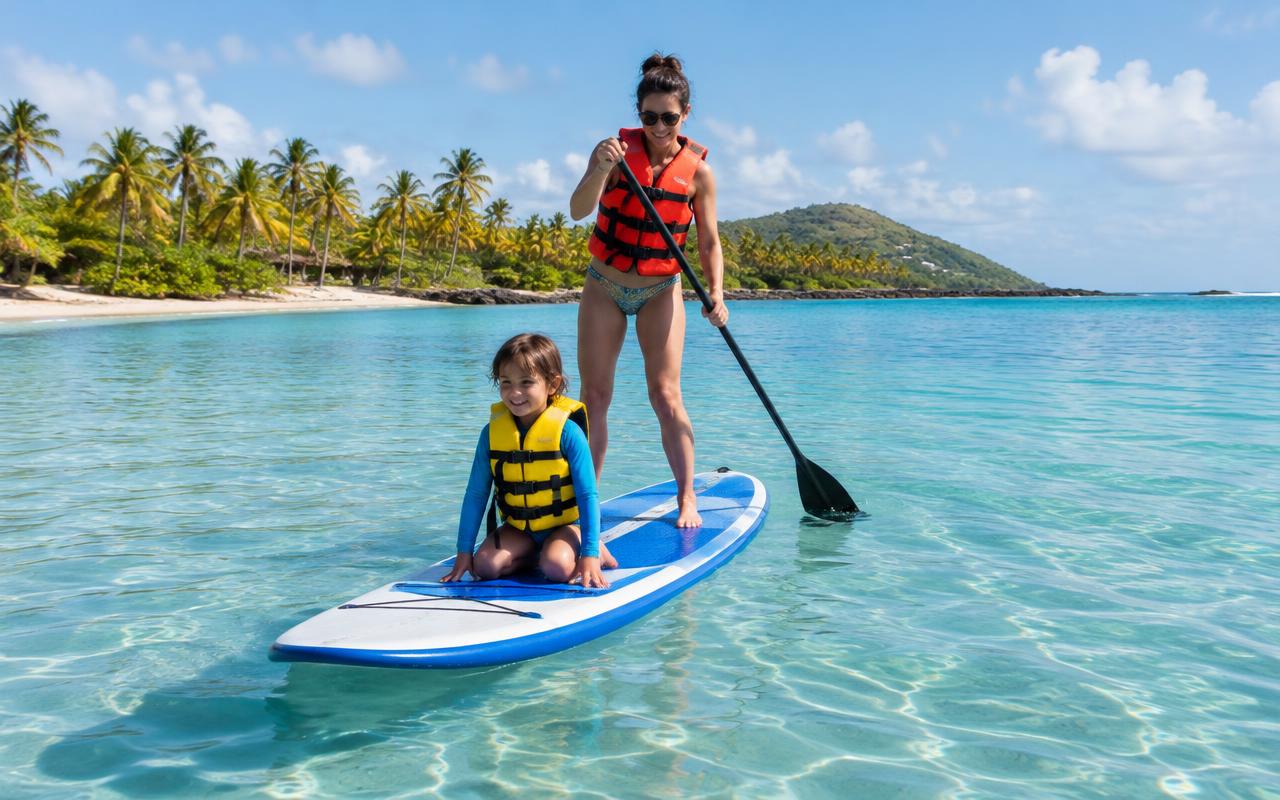
Generated illustration — not a depiction of a specific location
12 October 2026 · 4 min
Updated on 03/11/2026
The date above follows the editorial calendar; the content was revised on the update date.
Guadeloupe is a vast aquatic playground: calm lagoons, surf spots, coral reefs and boat trips. But not every activity suits every age or every set of conditions. Here are a few pointers for choosing as a family, with appropriate precautions.
The first criterion: age and swimming ability
Before booking anything, ask a simple question: can everyone swim, and how well? The answer guides everything else.
- Young children and non-swimmers: favour lagoon beaches with calm, shallow water and lifeguard supervision where available. Simply playing in the water is already a great adventure at this age.
- Children who can swim: supervised snorkelling opens up a new world — tropical fish, corals and sometimes turtles in protected areas.
- Sporty teenagers and adults: surfing, kitesurfing and windsurfing, depending on the spots and conditions.
- The whole family together: an excursion may be suitable if the operator confirms that it is appropriate for all participants.
Adapting the activity to the day’s conditions
In the tropics, conditions change: wind, swell and underwater visibility. Two golden rules:
- Check conditions that morning rather than setting the programme in stone the night before.
- Listen to local professionals: a school that postpones an outing does so for good reasons, not to upset your plans.
The Atlantic coastline of Le Moule, for example, offers renowned board sports conditions, but they can be demanding on some days; no lagoon should be assumed suitable for children without checking conditions and providing active supervision.
Choosing reputable operators
For supervised activities — surf schools, snorkelling trips and boat excursions — make a few simple checks:
- Supervision by qualified, insured professionals.
- Equipment supplied in good condition, with flotation vests in sizes suitable for the children.
- Reasonably sized groups and a safety briefing before departure.
- Recent reviews from other families.
A reputable professional will ask about participants’ ages and abilities without prompting: that is a good sign.
Safety equipment not to overlook
- High-protection sunscreen reapplied after every swim, or UV-protective T-shirts for children.
- Flotation vests for boat trips and supervised activities — these should be offered; otherwise, ask for them.
- Water and snacks: sun and exertion at sea quickly cause dehydration, especially in children.
- Footwear appropriate for the permitted site, without walking on coral or venturing onto exposed rocks.
Checking whether a boat trip suits your family
Of all the options, a boat trip remains the one with the broadest appeal: to Petite-Terre, La Désirade or the reefs, depending on the programme. To choose well as a family:
- Favour child-friendly full-day or half-day trips, with stops for swimming in calm water.
- Check that there is shelter from the sun on board.
- Bring something to keep younger children occupied during crossings.
After the activity: recovery is part of the programme
A family water activity is more tiring than you might think: sun, salt, exertion and excitement. What happens afterwards matters just as much as the activity itself. Always allow for a gentle transition: rinsing off with fresh water, rehydrating, a snack for the children and a quiet end to the day rather than a second activity. Tiredness and the effects of the sun may appear after the outing: keep an eye on how everyone is feeling and seek medical advice if any concerning symptoms arise.
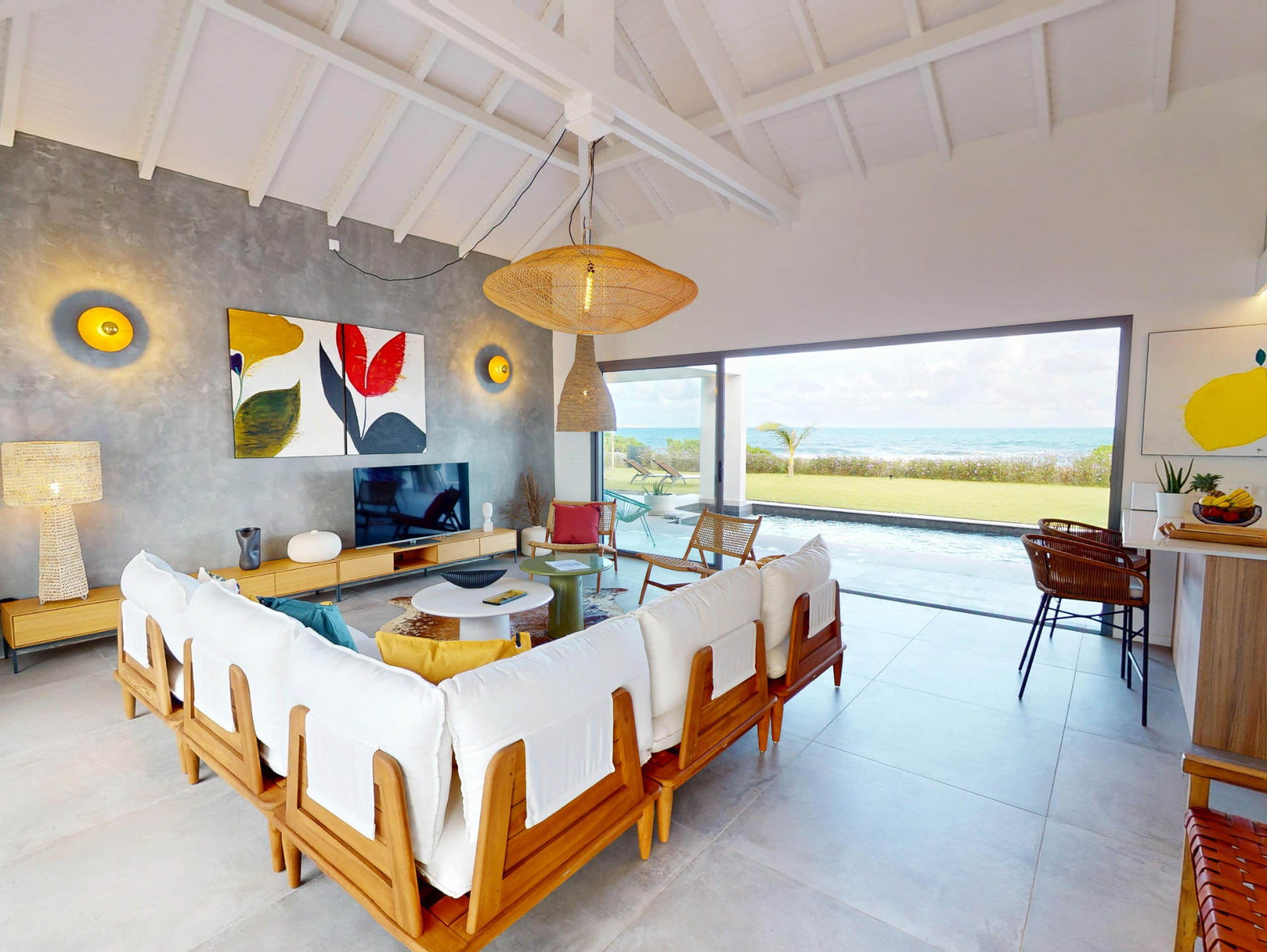
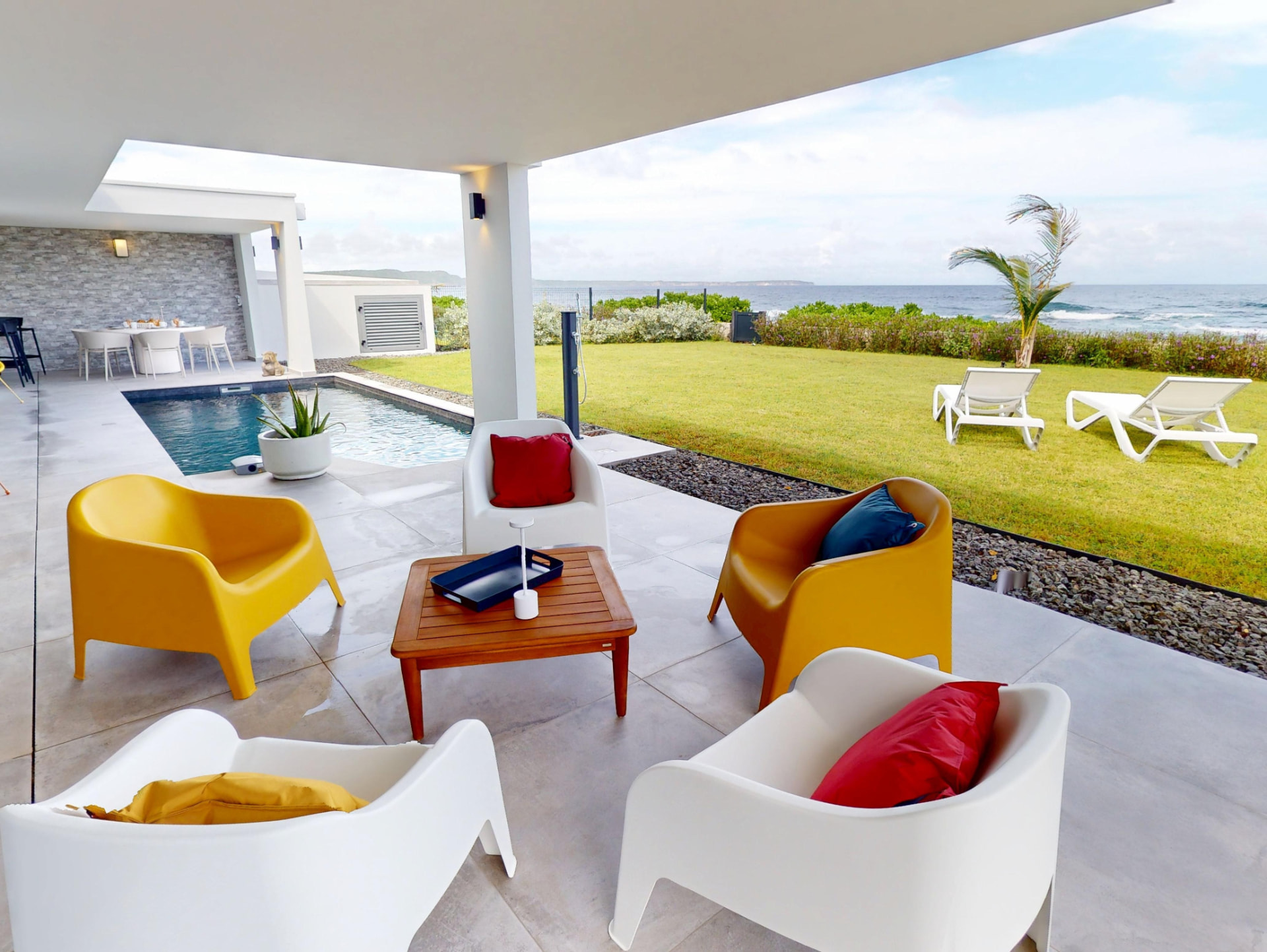
This is where accommodation becomes central again: returning to a comfortable villa or apartment, getting everyone showered without waiting, letting the most tired have a nap while the others enjoy the pool or terrace. The best days on the water are those that end with a restful evening, sharing stories of what everyone saw beneath the surface.
Conclusion
In Guadeloupe, choosing a water activity depends on ability, the operator’s requirements and the conditions — the key is to match them carefully: assessing swimming ability, adapting to participants, taking professional advice and being prepared to opt out. With reputable professionals, an eye on the conditions and the right equipment, the sea becomes the best memory of your holiday.
Checks before your outing
Access, weather and services may change. Check information with official organisations and the place concerned. A general description guarantees neither safe swimming, wildlife sightings nor admission without a booking. Respect closures; do not pursue animals or walk on coral.
Stay in Grande-Terre
Our homes in Le Moule and Saint-François.