Trou à Man Coco — Enrevseluj · CC BY-SA 4.0
23 March 2026 · 4 min
Updated on 03/11/2026 · Original article: 20/03/2026
The date above follows the editorial calendar; the content was revised on the update date.
The name Man Coco arouses curiosity as much as the cliff scenery surrounding it. From Porte d’Enfer, the idea is a walk to a specific destination, to be planned according to the condition of the path, and an encounter with the stories associated with the place. The spellings Man Coco or Mam Coco, oral tradition and documented history should not be conflated. This guide offers a reading of the landforms and their legends, without exploring cavities or presenting any account as certain fact.
Man Coco: give your walk a clear purpose
Choosing Trou à Man Coco means taking an interest in a named place and its surrounding landscape, rather than in a walking achievement. Before leaving Porte d’Enfer, ask how the site is identified in local information and which path is currently permitted. The spellings Man Coco and Mam Coco may vary between resources; retain this variant in your searches to help you find information. However, do not replace this name with Man Louis, which refers to another site. This attention to names is part of the discovery: it avoids mixing up nearby routes and prepares you for a more precise conversation with a guide or the tourist office.
Observe a landscape without trying to enter it
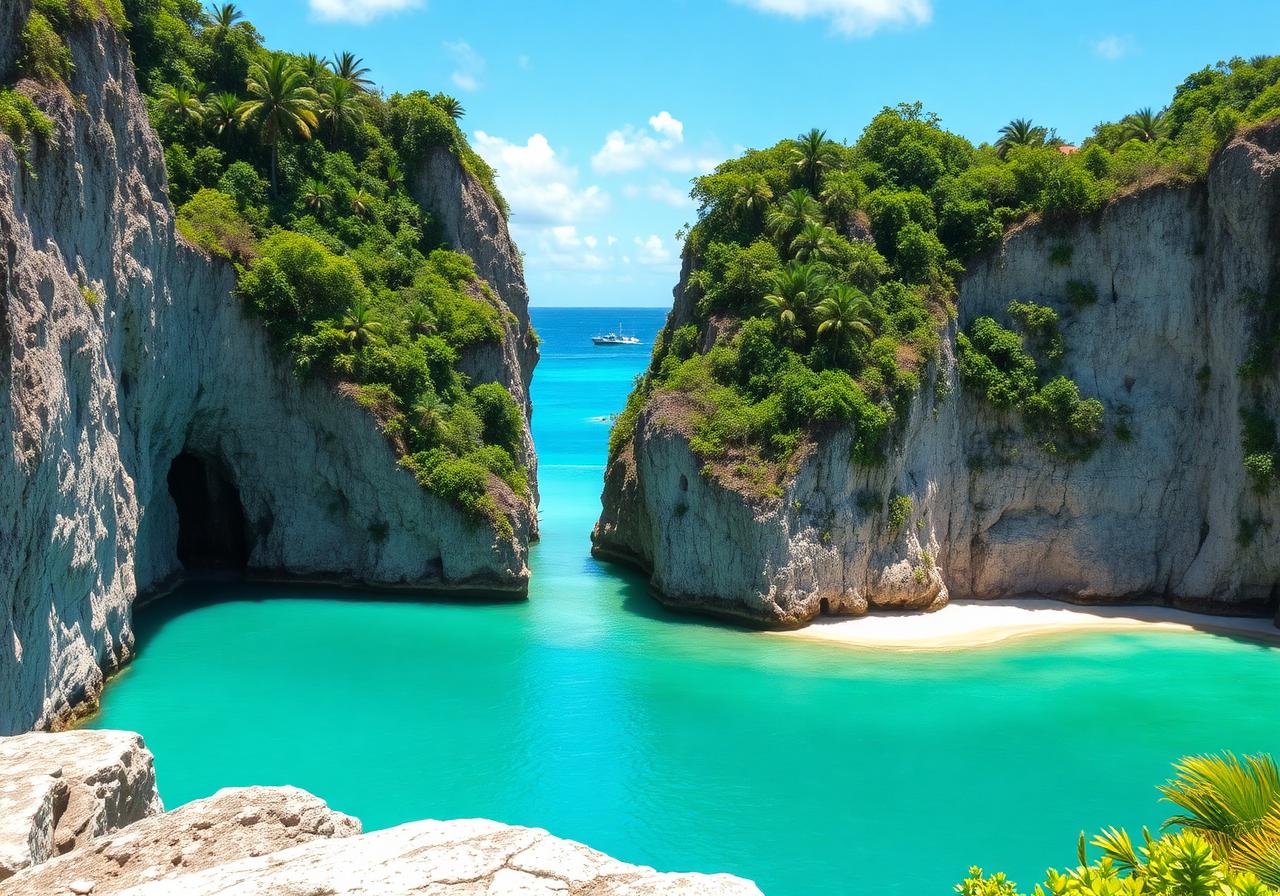
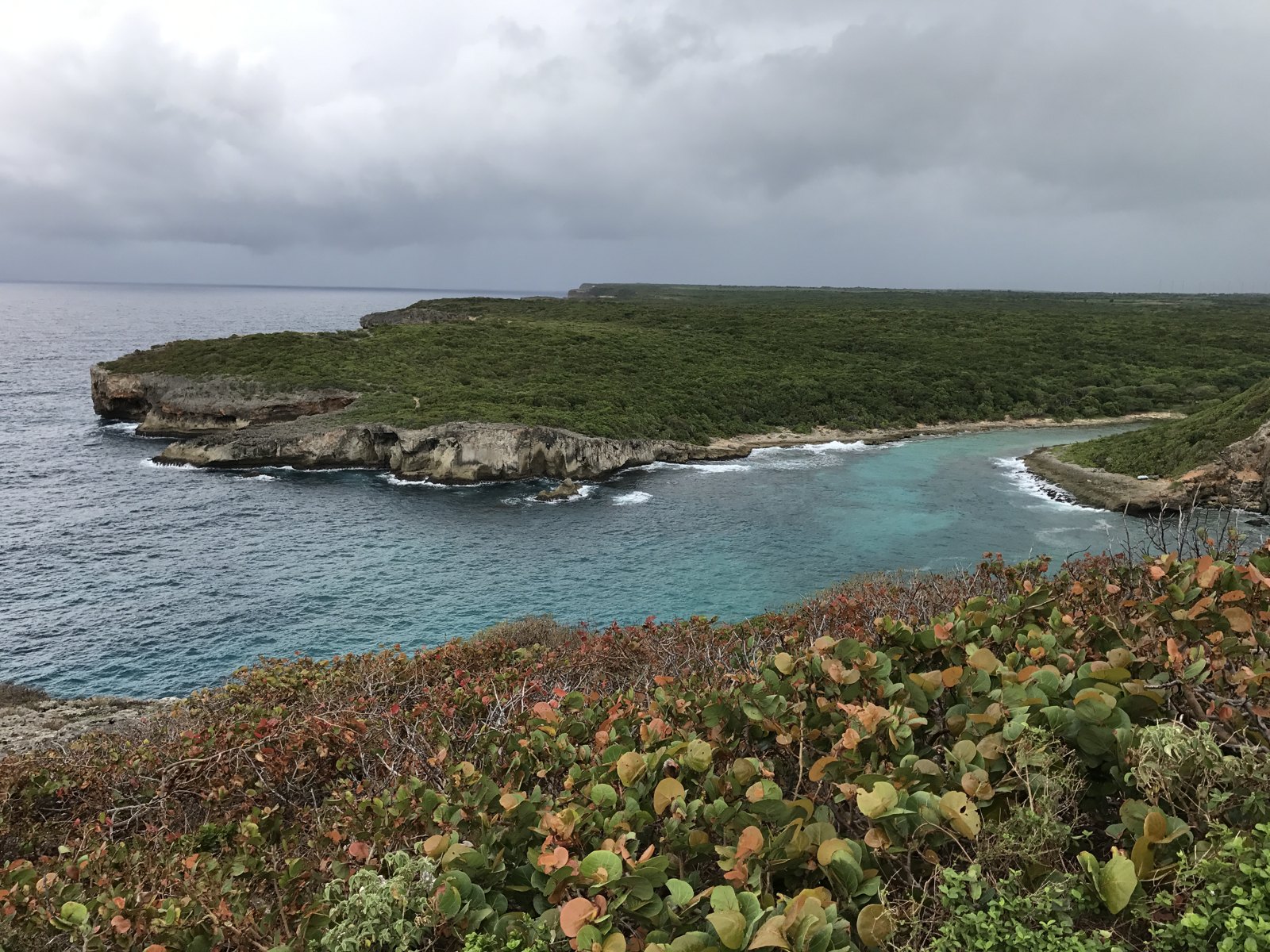
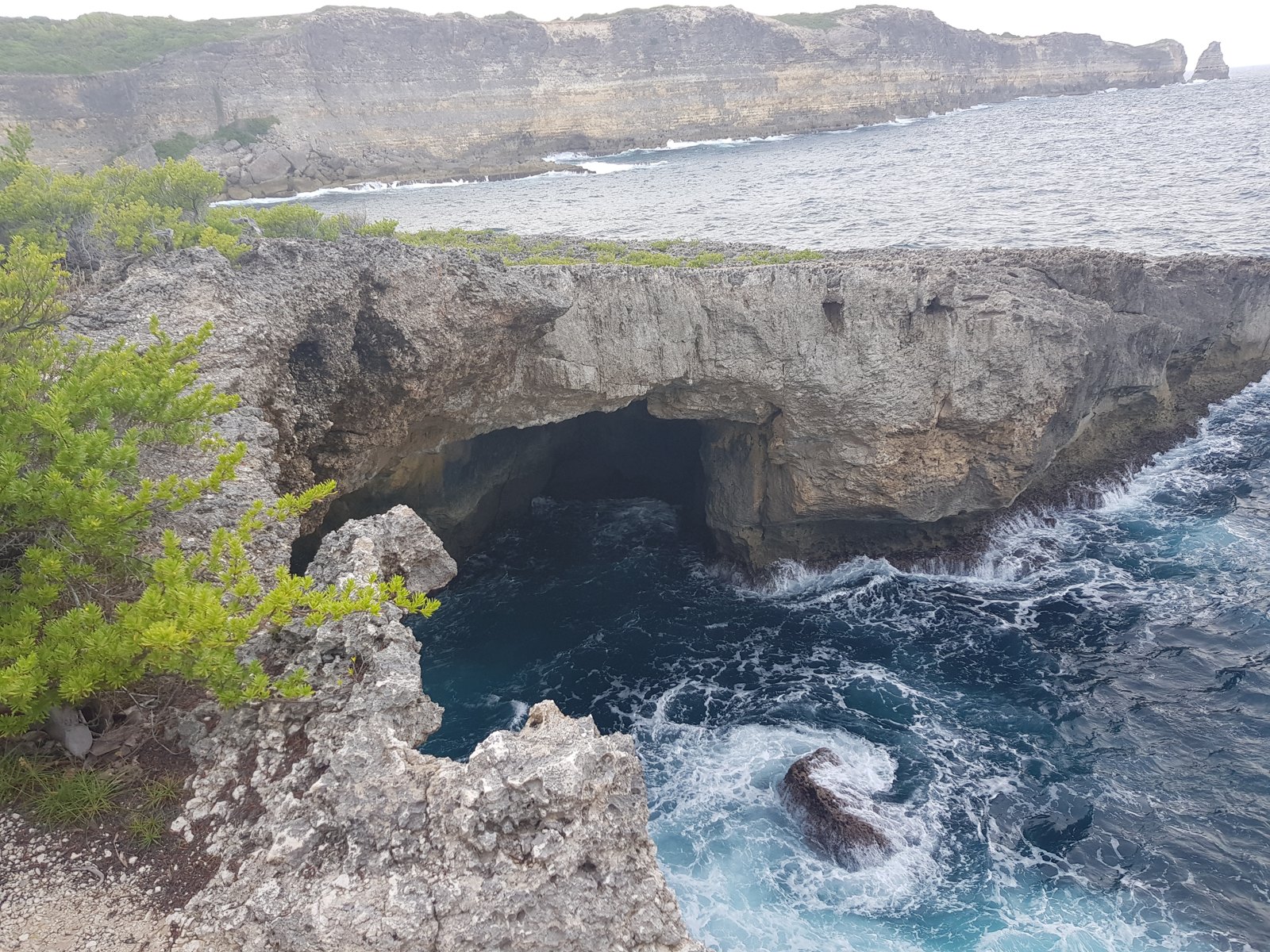
The appeal of a coastal walk lies as much in the relationships between shapes as in a destination. Look at the line of the cliffs, the visible openings and the contrast between rock and ocean from permitted paths. For a drawing, choose a few simple lines; for a photograph, leave room for the landscape around the subject. You often understand landforms better by keeping your distance than by trying to get closer. This approach also suits those who prefer observing to taking photographs. It requires neither exploring cavities nor accessing the foot of the cliffs, and gives meaning to the walk without presenting the place as an adventure facility.
Make room for stories and their variants
When a guide or resident mentions Man Coco, start by listening to the version they tell you. You can ask how the story was passed on to them, whether other variants exist and what the name means to people in the area. These questions welcome the story without trying to turn it into proof. If you take notes to share it later, indicate that it is an oral tradition and do not merge several versions into a biography presented as certain fact. The value of a legend does not depend on its documentary accuracy. It can open a conversation about the memory of a landscape, while leaving verified history to its own methods and sources.
Bring back a discovery rather than a collection of evidence
To keep a memory of the outing, combine three elements: a personal observation of the landscape, a correctly recorded name and a question left open. This small collection tells the story of the walk better than a series of details supposedly confirming the legend. With children, everyone can draw what they actually saw, then distinguish what belongs to the story they heard. With friends, compare your impressions without seeking a single version. If access ultimately prevents you from reaching your destination, this approach remains possible from the open areas of Porte d’Enfer. You will have discovered a landscape and a way of talking about it, without making the destination the sole measure of the outing’s success.
Set off from Porte d’Enfer with the right information
The official description of Porte d’Enfer mentions a coastal path towards the hole. This does not confirm its current condition, its waymarking or its suitability for your group. Ask the tourist office about conditions and read the signs at the start. Do not assume the route is always open.
Walk well away from the edges
The limestone landscapes invite you to stop, but a cliff edge is not a safe viewpoint. Stay on the authorised path and do not climb down into a cavity for a photo. Wind, rain and heat can change the level of difficulty. Bring water, wear closed-toe shoes and plan to return before exhaustion sets in.
Listen to the stories without inventing details
The place name is associated with stories passed down locally, whose versions may differ. A local guide or heritage interpreter can explain the variations. Without a verified historical reference, this guide provides neither a presumed biography of Man Coco nor any date or event presented as certain.
A focused walk, not the whole Trace
Choose this outing if your interest lies in the site and the landscape from Porte d’Enfer. To prepare for a longer coastal walk, consult the article on Trace des Falaises and a recent official information sheet. If the path is closed or the weather is unfavourable, stick to viewing the landscape from the accessible areas at the start.
Reference sources
Stay in Grande-Terre
Our homes in Le Moule and Saint-François.