30 March 2026 · 4 min
Updated on 03/11/2026 · Original article: 22/03/2026
The date above follows the editorial calendar; the content was revised on the update date.
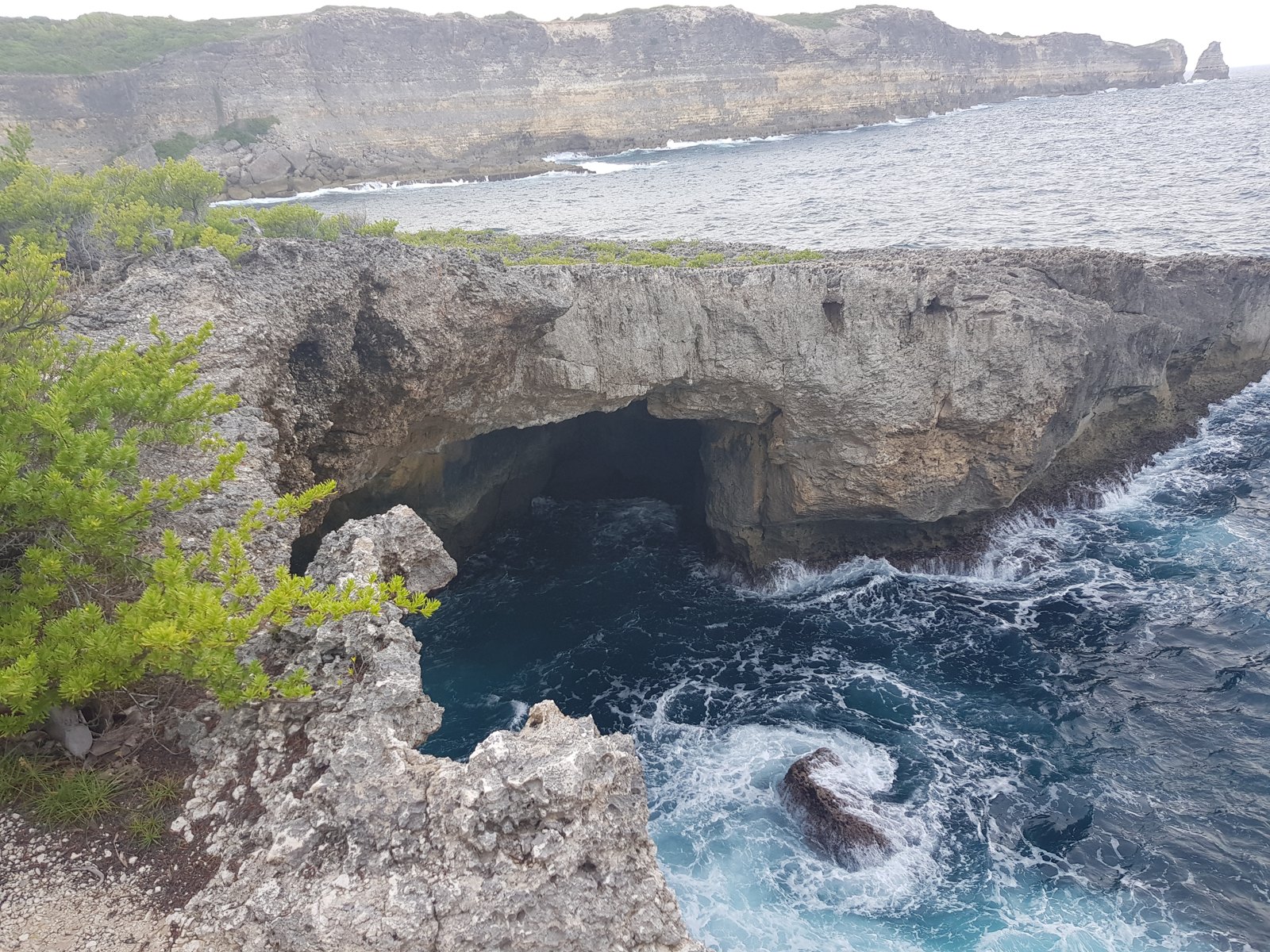
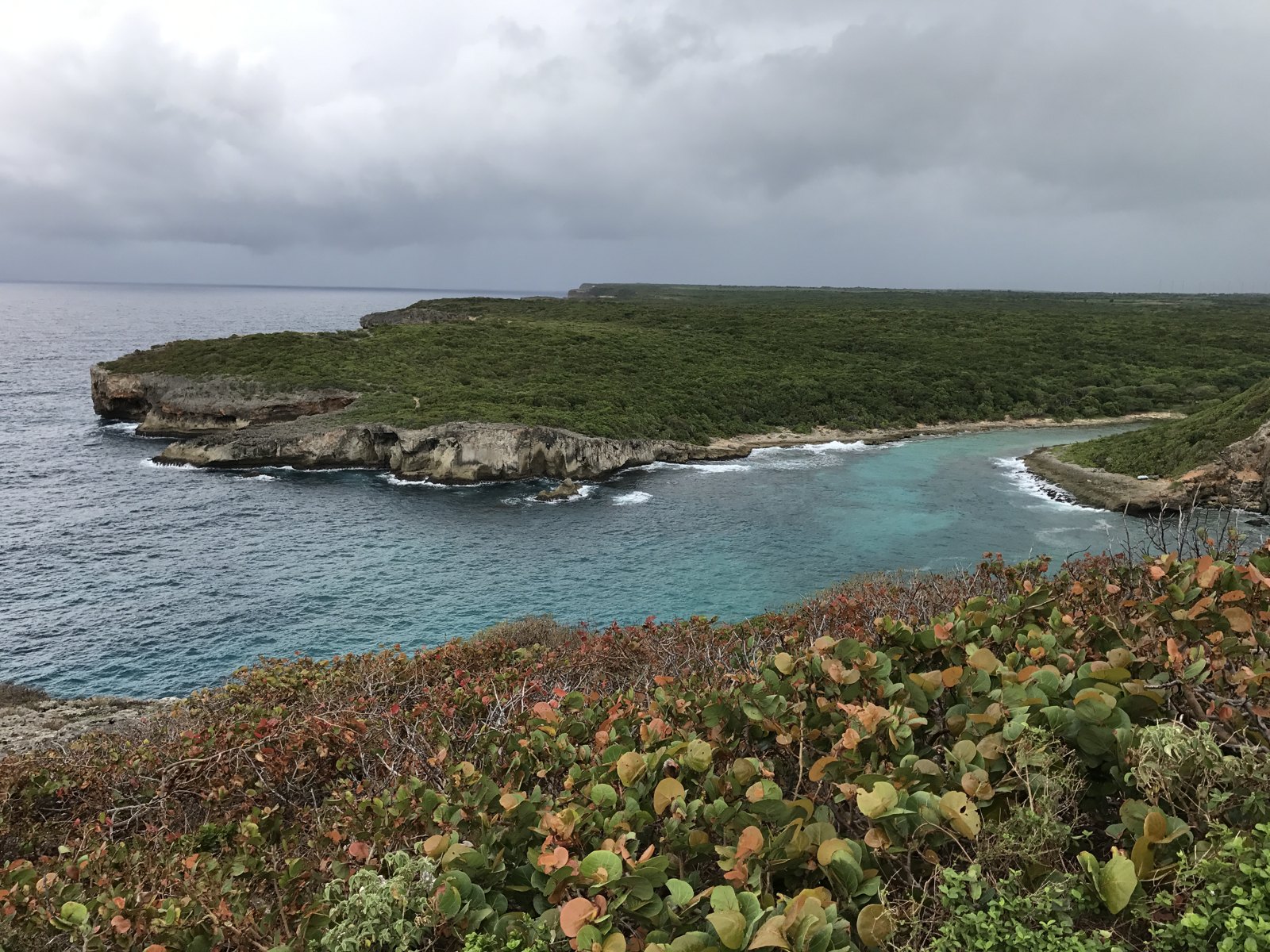
At Porte d’Enfer in Anse-Bertrand, the opening towards the Atlantic and the limestone walls form a landscape you can discover without entering the water. A stop here invites you to look, then perhaps plan a specific walk. This guide distinguishes between visiting the cove, Trou à Man Coco and the longer coastal trails, keeping access and conditions on the day firmly in view. Always specify the municipality: some places have similar names.
A visit that begins with the shape of the cove
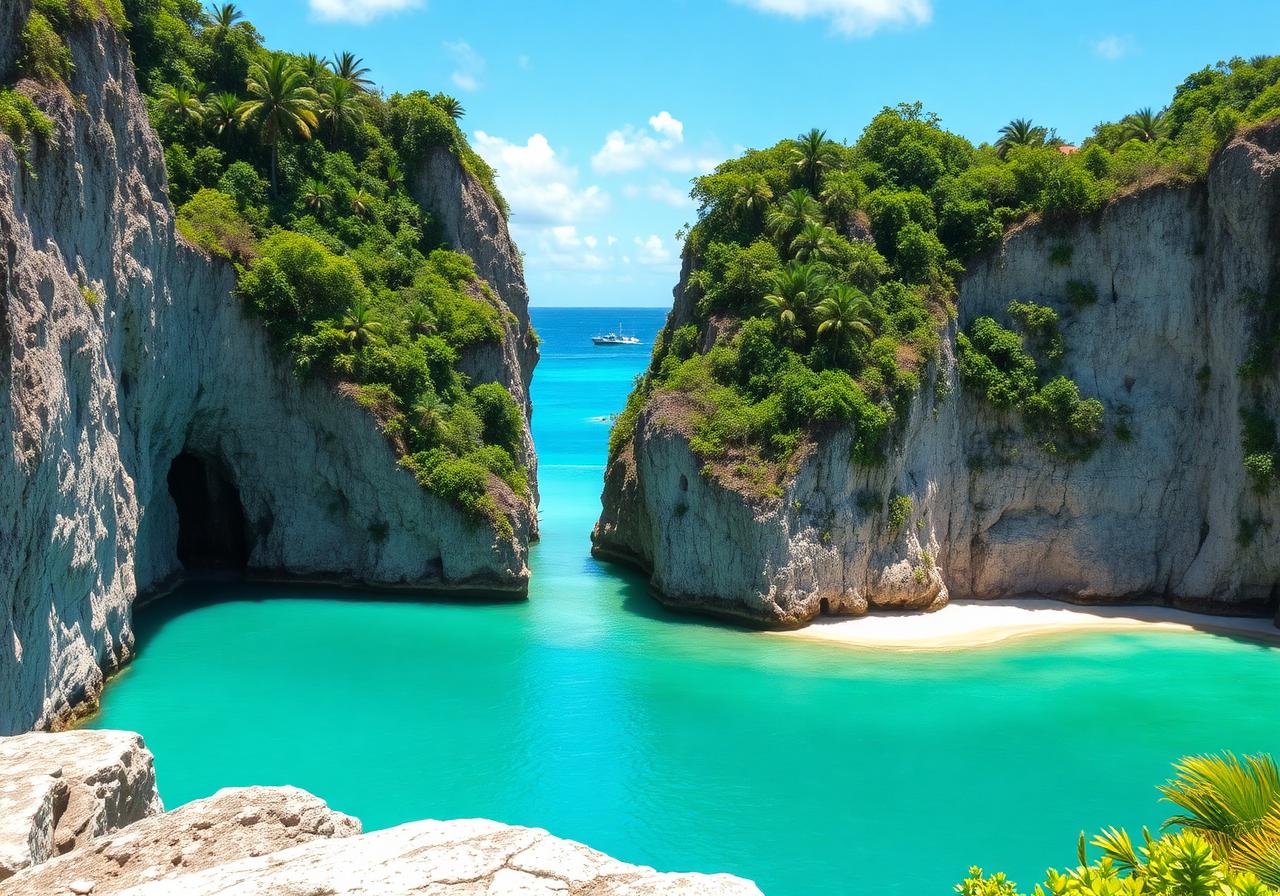
At Porte d’Enfer in Anse-Bertrand, first take time to take in the whole landscape from an accessible area. Identify the opening towards the open sea, the walls framing the cove and the way your gaze moves from the land to the Atlantic. This initial reading helps you understand the site without immediately looking for a path or somewhere to enter the water. You can choose a wide frame for a photograph, then look at the details the image leaves out. The visit centres on this relationship between the opening and the landforms. It therefore remains rewarding when you come simply to observe, with no swimming or hiking planned.
Notice the differences without drawing false conclusions
From land, the water inside the cove and the open sea may look different. Observe the colours, movements and lines of foam as elements of the landscape, not as a safety assessment. The tourist information sheet mentions, in particular, the effects of wind and bad weather at the lagoon entrance. This context gives you another reason not to confuse a visual impression with a decision to swim. To enrich your discovery, compare several views from areas open to visitors, without trying to move towards the opening to the sea. A notebook recording what you can actually make out is often more useful than a general explanation about a sea supposedly always calm or always raging.
Distinguish between a stop, Man Coco and the longer trails
Three plans can share the same starting point, but they require different preparation: a scenic stop at Porte d’Enfer, a walk specifically to Trou à Man Coco and a longer coastal hike. The first can stay within the accessible areas of the cove; the second requires you to identify the path and its condition; the third calls for a route sheet and specific arrangements. Names encountered on a map do not prove that you can link everything together. Nor should you confuse Man Coco with Man Louis, mentioned on the Trace des Pêcheurs. Deciding on your aim before setting off prevents an improvised visit from gradually becoming an unprepared hike.
Add another landscape without insisting on a circular route
If you would like to complement Porte d’Enfer, choose just one other place to explore in the municipality of Anse-Bertrand. La Grande Vigie continues the focus on cliffs and the open sea; the town centre can offer discovery on a different scale, centred on inhabited spaces. Ask yourself whether you want to compare landforms or change the atmosphere. In either case, treat the journey as a stage to organise, not as the natural continuation of a walk. You can also keep Porte d’Enfer as the sole focus of your outing: looking at the same landscape at length, then discussing it over a break, makes a complete visit. There is no need to turn every discovery of the north into a tour.
Plan access to the right site
Save the location in Anse-Bertrand and confirm permitted access with the tourist office. Car parks and swimming areas are listed as unsupervised in the area’s official hiking information sheet. Do not leave objects visible in your vehicle, and respect any closures.
Take time to observe
From accessible public areas, look at the contrast between the opening to the sea and the cliffs. Stay well away from edges: erosion can weaken parts of the ground. Photography and contemplation are enough to make a rewarding visit; there is no need to go down as close as possible to the waves.
The sea decides the programme
The tourist resource highlights the effects of wind and bad weather on the lagoon entrance, as well as sharp rocks. It does not constitute permission to swim on the day of your visit. Sargassum, swell and local advisories may mean staying on land. Do not let children explore the rocks alone.
Continue towards Trou à Man Coco
A coastal path is mentioned towards Trou à Mam Coco and Trou du Souffleur. This visit is separate from a full hike along the Trace des Falaises. Check that the route is open and what condition it is in before setting off; bring water and suitable footwear, and plan to turn back if conditions change.
Reference sources
Stay in Grande-Terre
Our homes in Le Moule and Saint-François.