6 April 2026 · 4 min
Updated on 03/11/2026 · Original article: 23/03/2026
The date above follows the editorial calendar; the content was revised on the update date.
At Damencourt, a session begins long before a surfer stands up: observing, waiting and making choices are all part of the sport. Le Moule offers a chance to discover this ocean culture, from land or with suitable instruction. A spot’s reputation alone is not enough to justify entering the water. This guide helps you describe your ability, understand which questions to ask and keep your stay interesting when conditions mean deciding not to surf.
Describe your ability using specific situations
Before contacting a professional in Le Moule, prepare a precise description of your surfing experience. ‘I have surfed before’ could mean a first attempt long ago or regular sessions. Instead, explain what you can do, the type of instruction you have already received and what you find difficult. Also mention whether you are coming alone or with people of different abilities. These details make the conversation more useful than a general enquiry about the best spot. You can ask what goal would be realistic: getting a feel for it again, working on a technique or simply discovering the sport. The professional can then discuss a suitable proposal, without your request assuming that entering the water at Damencourt is a given.
Understand what the forecasts show
A bulletin or app does not provide a single answer to the question ‘can we surf?’. To prepare for your conversation with an instructor, distinguish between the forecast information on swell, wind and tide, then ask how it translates to the area you are considering. The aim is not to become a forecaster before your holiday, but to understand why a recommendation may change. Keep a record of your questions and the explanations you receive; you will gradually develop a more precise vocabulary. Observing from accommodation or another point along the coast is no substitute for this assessment of the spot. The same ocean can present very different situations depending on the place and time.
Watch a session to better understand the sport
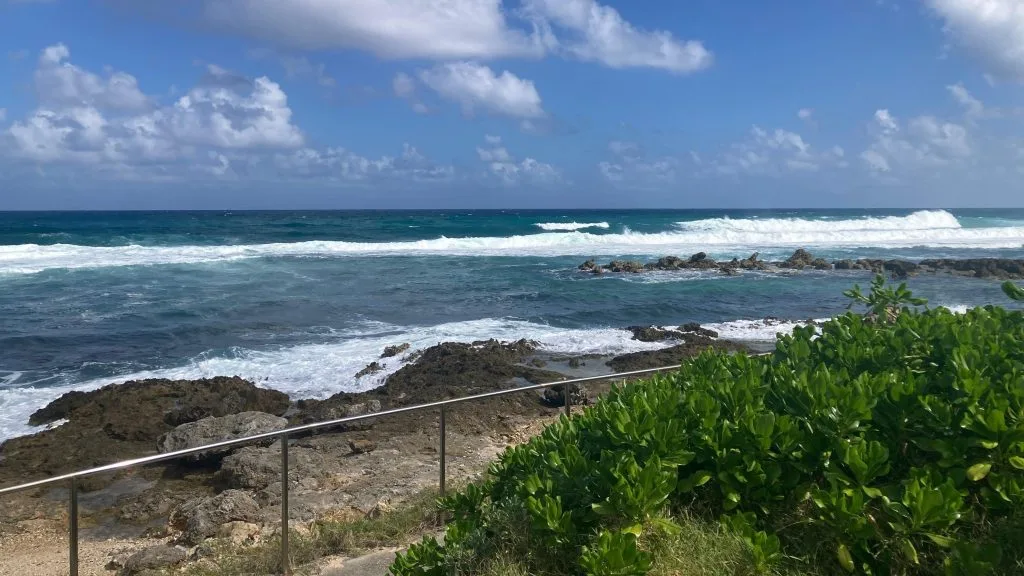
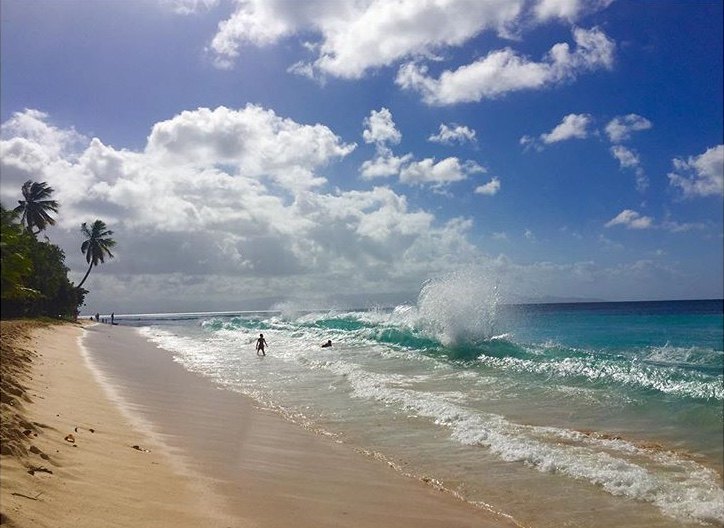
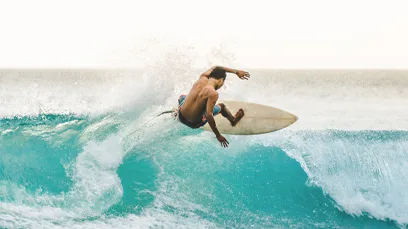
At Damencourt, watching from land can be part of the learning process. Watch the sequence of waiting periods and attempts, rather than just the successfully ridden waves. Try to describe what you see without immediately concluding that conditions are easy or difficult. After a lesson, discussing a specific situation with the instructor helps connect an explanation to an image: positioning, a choice or deciding not to proceed. For companions who do not surf, this way of watching is interesting in its own right. They can discover the rhythm of a session without passively waiting for the activity to end. Agree together on a meeting point on land, rather than turning the shore into an improvised waiting room.
Plan a stay that remains worthwhile without a surf session
A surf-focused stay is more enjoyable when a cancellation does not leave the whole day empty. In Le Moule, the town centre, an introduction to sugar cane or a coastal walk can offer another outing, depending on confirmed opening hours and access. Prepare these ideas before you leave, without treating them as second-best activities. After a session, also set aside time to note what you have learnt and what you would like to work on again. In a group mixing surfers and non-surfers, alternate between interests rather than asking the same people to wait on every outing. The trip then becomes a discovery of Le Moule shaped by surfing, rather than entirely dependent on the waves.
Damencourt: a reference point, not a guarantee
Official resources on board sports mention Damencourt. Observe the site from land: where surfers enter and leave the water, visible obstacles and how busy it is. This observation helps you ask questions; it does not replace knowledge of the spot, its currents and the seabed.
Learning or surfing independently
If you are a beginner, contact a school and explain your swimming ability, your experience and the group’s needs. Ask whether the location and conditions really are suitable for an introductory session. An instructor may change the time slot or spot, or cancel. Do not simply follow an experienced group into the water.
Assess the conditions before every session
Swell, wind and tide change. Consult marine forecasts, local guidance and the professional’s advice; do not rely on a supposed universal surfing season. Check your equipment, ways of getting back and what to do if you encounter difficulties. Deciding not to go remains a normal choice.
Respect the spot and other people
Follow the priority rules explained on site and keep enough distance to avoid collisions. Do not cross an area used by surfers to go swimming. From the shore, take photographs without blocking access; for children and companions, choose a waiting place away from waves and exposed rocks.
Reference sources
Stay in Grande-Terre
Our homes in Le Moule and Saint-François.