Generated illustration — not a depiction of a specific location
17 August 2026 · 4 min
Updated on 03/11/2026
The date above follows the editorial calendar; the content was revised on the update date.
One of the great pleasures of staying in a villa or apartment is cooking. And in Guadeloupe, it becomes an adventure in itself: between the colourful markets, fish landed that morning and fruits you cannot find elsewhere, preparing meals is an integral part of the holiday.
Markets, the beating heart of local cuisine
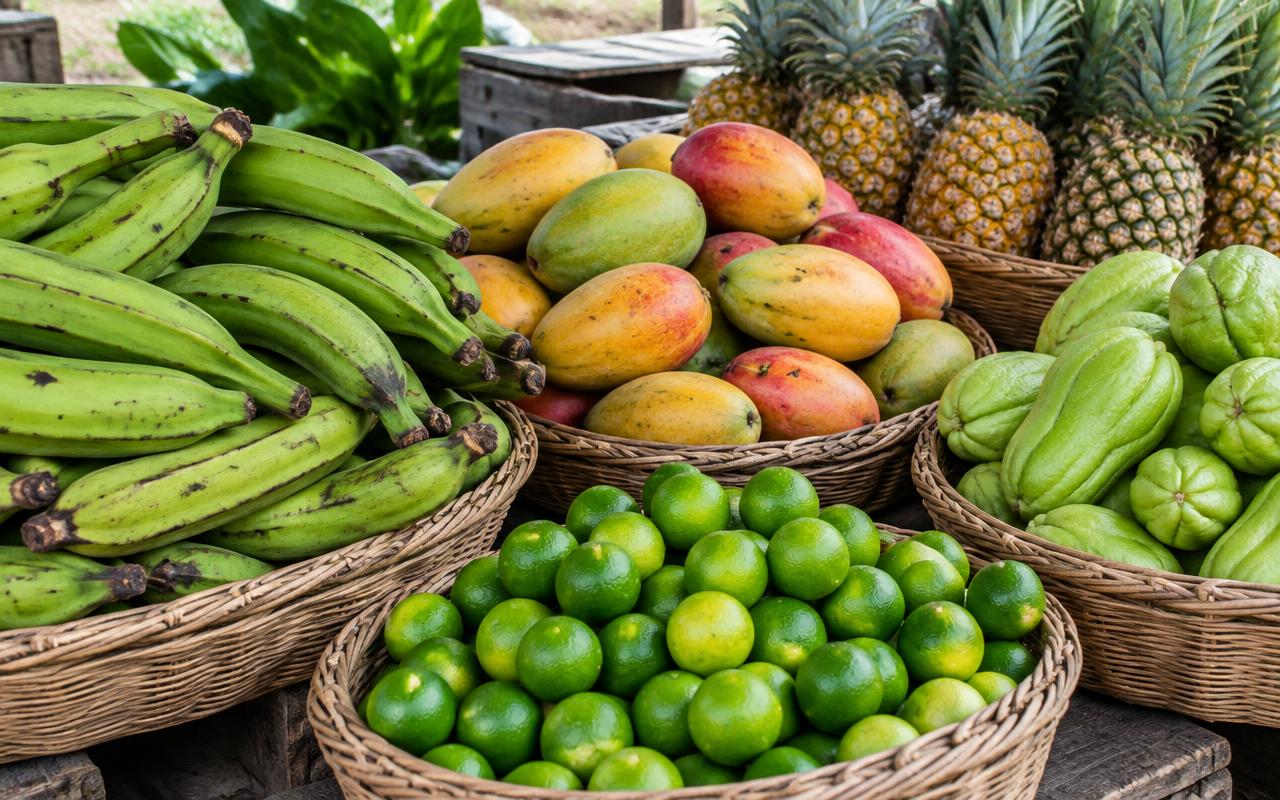
Each municipality in Grande-Terre has its own market, with its own customs and atmosphere. You will find fruit stalls — mangoes, pineapples, passion fruit and guavas depending on the season — fragrant spices, colombo powder and homemade sauce chien.
A few tips for shopping at the market:
- Come in the morning, when the stalls are best stocked and the heat is bearable.
- Ask the stallholders for advice: they are happy to explain how to prepare an unfamiliar vegetable or fruit.
- Bring change and a sturdy bag or shopping tote.
In Le Moule as in Saint-François, the market is also a slice of local life: people come as much for the atmosphere as for supplies.
Fish and seafood
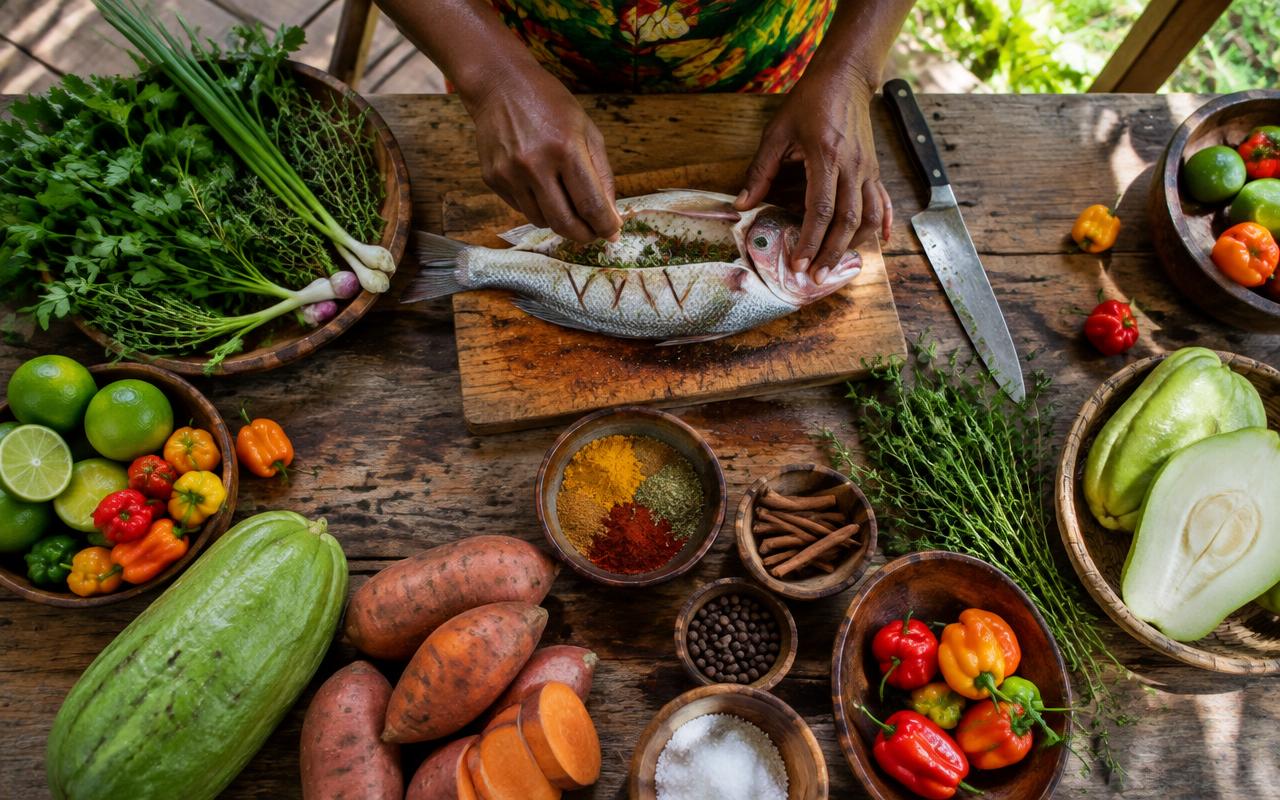
Guadeloupe’s fishing deserves attention: fish and other seafood vary according to the catch and the rules governing their sale; ask the seller for information. Fishmongers and some seafront stalls offer the day’s catch. Nothing could be simpler to cook: a grill, a drizzle of olive oil, lime, sauce chien — and dinner is ready on the terrace.
For shellfish lovers, ask locally: ouassous, the freshwater crayfish emblematic of the island, are mainly enjoyed in municipalities where the tradition lives on.
Fruit and vegetables to discover
A stay in Guadeloupe is a chance to taste produce rarely found in mainland France:
- Fruit: soursop, custard apple, star fruit, breadfruit — each has its own season and way of being prepared.
- Local vegetables: christophine, giraumon pumpkin, taro, yam and sweet potato, cooked in gratins, mashed or simply boiled.
- Herbs and aromatics: spring onions, local thyme and mild vegetarian chillies for flavour without the heat.
Speaking of chillies: Creole cooking loves them, but use them cautiously. Start with a little, especially with the famous Caribbean chilli.
Cooking in a holiday rental: comfort that makes all the difference
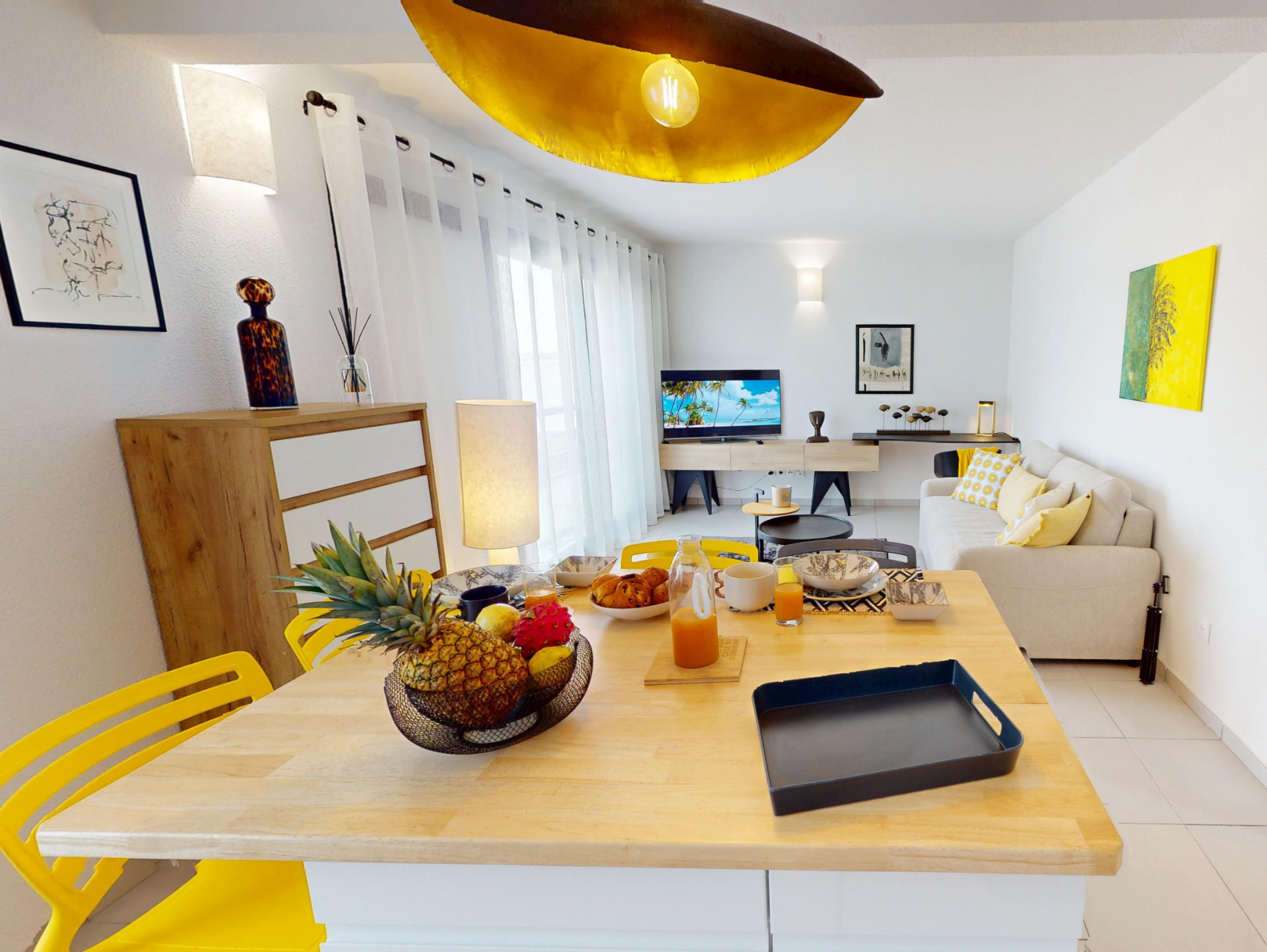
Choose your recipes to suit the kitchen actually available. Before shopping, check the hob, utensils and facilities for keeping food chilled. Fish court-bouillon or christophine gratin requires different preparation from a fruit salad: asking the seller for a recipe and then adjusting the quantities to suit your group is already a lovely way to discover the flavours.
A few realistic holiday menu ideas:
- Morning: fresh fruit, bread, freshly squeezed passion fruit juice.
- Lunchtime: grilled fish, rice, sauce chien, green salad.
- Evening: accras fritters or Creole blood sausage bought at the market, plantain, local vegetables.
Not forgetting restaurants
Cooking does not mean missing out on local restaurants. Alternating is ideal: a few home-cooked meals, a few outings — a seaside lolo, a restaurant at the marina in Saint-François, a traditional Creole restaurant. Your rental then becomes a base for food discoveries, not a constraint.
Filling your basket: good shopping habits
Beyond the market, a few sources of supplies are worth a detour during your stay. Municipal fishmongers sell the day’s catch, often in the morning; do not hesitate to ask for your fish to be prepared, a service generally offered. Roadside stalls sell fruit, freshly squeezed juices and local vegetables at often modest prices, and shopping there is as much a conversation as a transaction. Supermarkets, finally, are useful for everyday essentials and larger shops at the start of your stay.
In terms of organisation, one big shop at the beginning of the week, followed by two or three return visits to the market for fresh produce, makes for a pleasant rhythm: shopping becomes a stroll, not a chore. And if a product intrigues you, taste it before buying when offered — it is customary, and the best guide.
Conclusion
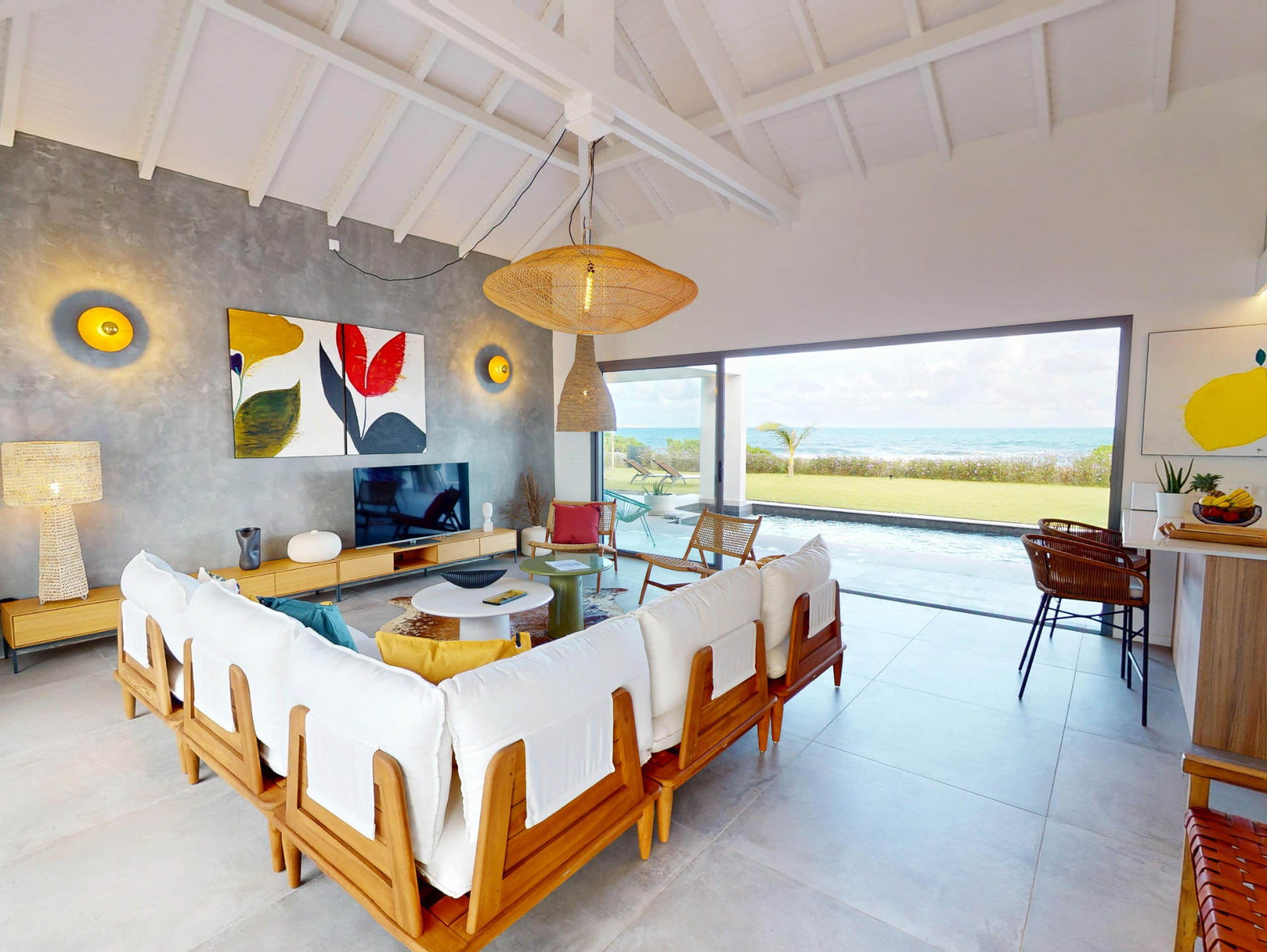
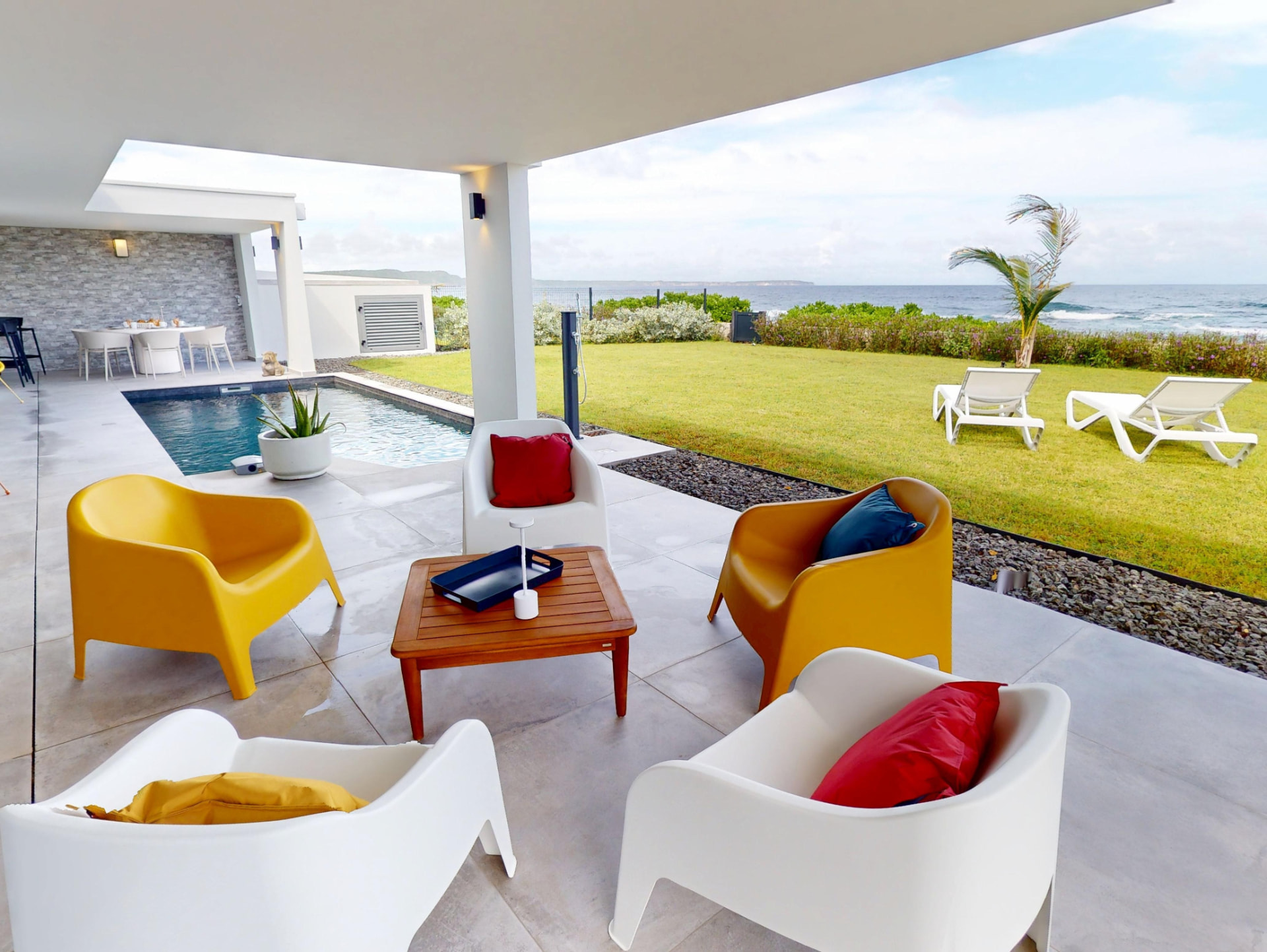
Cooking local food in Guadeloupe means extending your discovery of the island to your plate. A morning market, a well-equipped kitchen, a terrace facing the sea: that is all it takes for meals to become some of the finest memories of your stay.
Stay in Grande-Terre
Our homes in Le Moule and Saint-François.