21 September 2026 · 4 min
Updated on 03/11/2026
The date above follows the editorial calendar; the content was revised on the update date.
Grande-Terre offers photography enthusiasts remarkable variety: golden sandy beaches, cliffs battered by the trade winds, marinas at sunset and colourful Creole houses. But tropical light has its demands. Here are a few pointers to help you come home with images that do the landscapes justice.
Understanding tropical light
In the tropics, the sun rises quickly and beats down hard: between late morning and mid-afternoon, the light is harsh, shadows are short and colours look washed out. The best moments for photography are therefore concentrated:
- At daybreak, when low-angle light gilds the beaches and places are still deserted. In Le Moule, facing the Atlantic, this is the magical moment.
- In late afternoon, for warm tones over the lagoon and backlit silhouettes.
- Just after a shower, when the clouds part and the colours seem freshly washed.
The good news: days begin early in Guadeloupe, and early-rising holidaymakers are rewarded.
Grande-Terre’s iconic subjects
A few photographic playgrounds to explore:
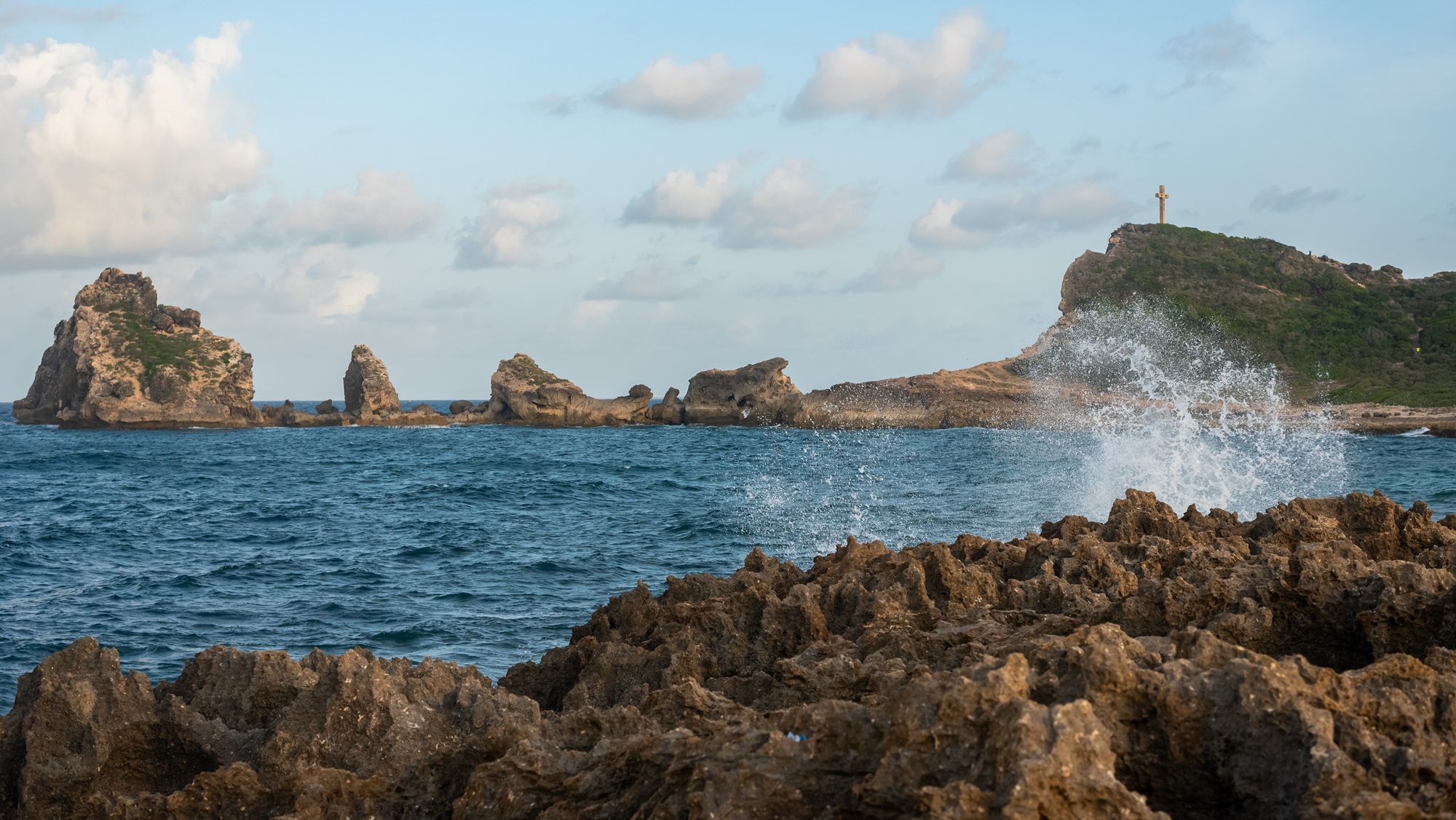
- Pointe des Châteaux, in the far east: cliffs, a cross overlooking the ocean and views of La Désirade on clear days. Spectacular at sunrise.
- The beaches along the southern coast, between Saint-François and Sainte-Anne, for turquoise waters and leaning coconut palms.
- The harbour and marina in Saint-François, photogenic towards the end of the day as the boats return.
- The seafront in Le Moule, wilder, with waves and surfers for action shots.
- The markets, for colour and portraits — always ask permission before photographing someone.
A few technical habits
You don’t need professional equipment: a good smartphone or a lightweight mirrorless camera is enough. What matters:
- Keep the horizon level: a magnificent beach with a tilted horizon loses all its impact.
- Look for foreground interest: a rock, a coconut palm, a small boat — it gives landscapes depth.
- Protect your equipment: sand, salt and humidity are the enemies of electronics. A cover or waterproof bag is a small investment.
- Back up your images every evening, on a second storage device or in the cloud if the connection allows.
Taking photographs from your accommodation
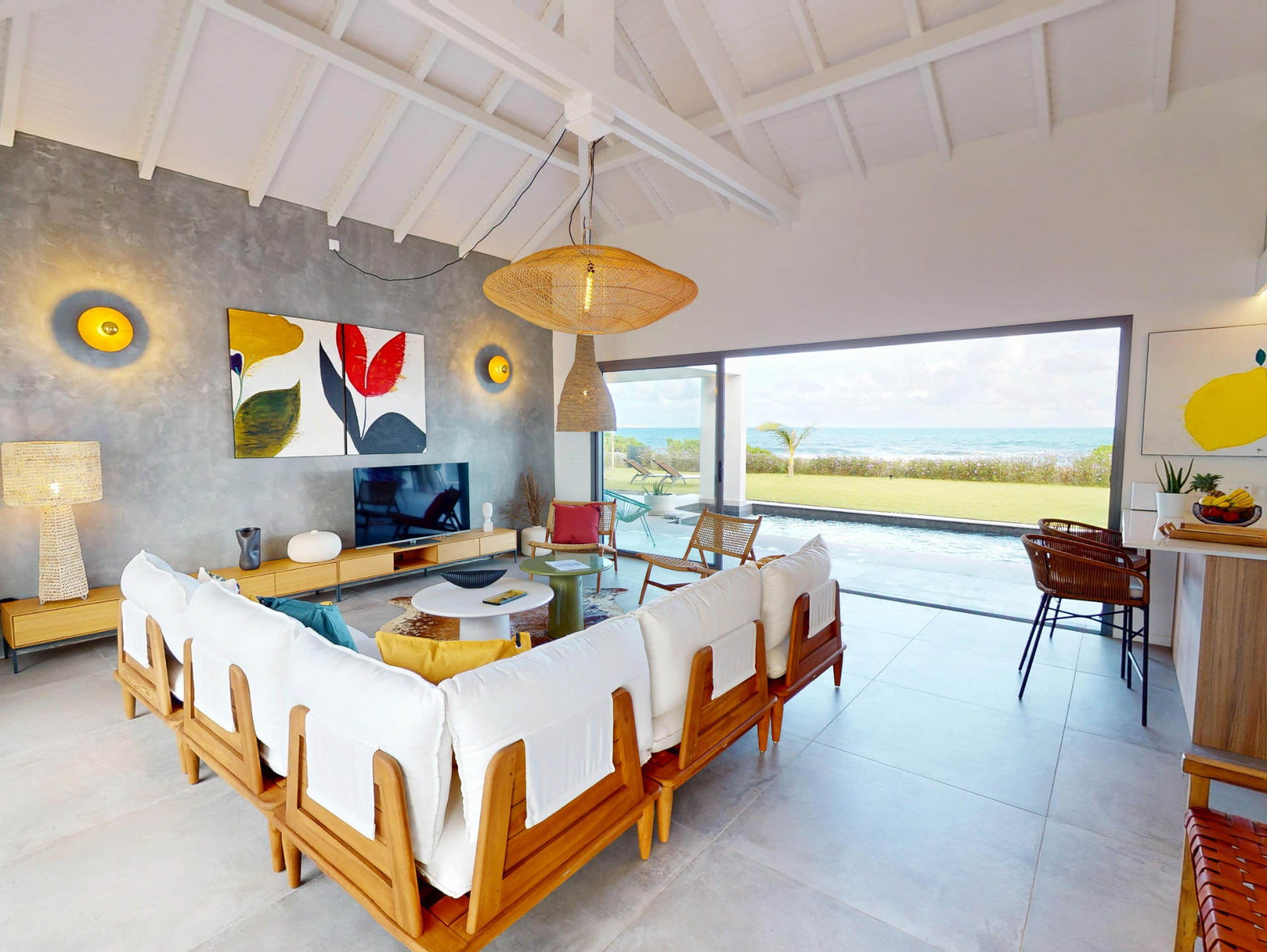
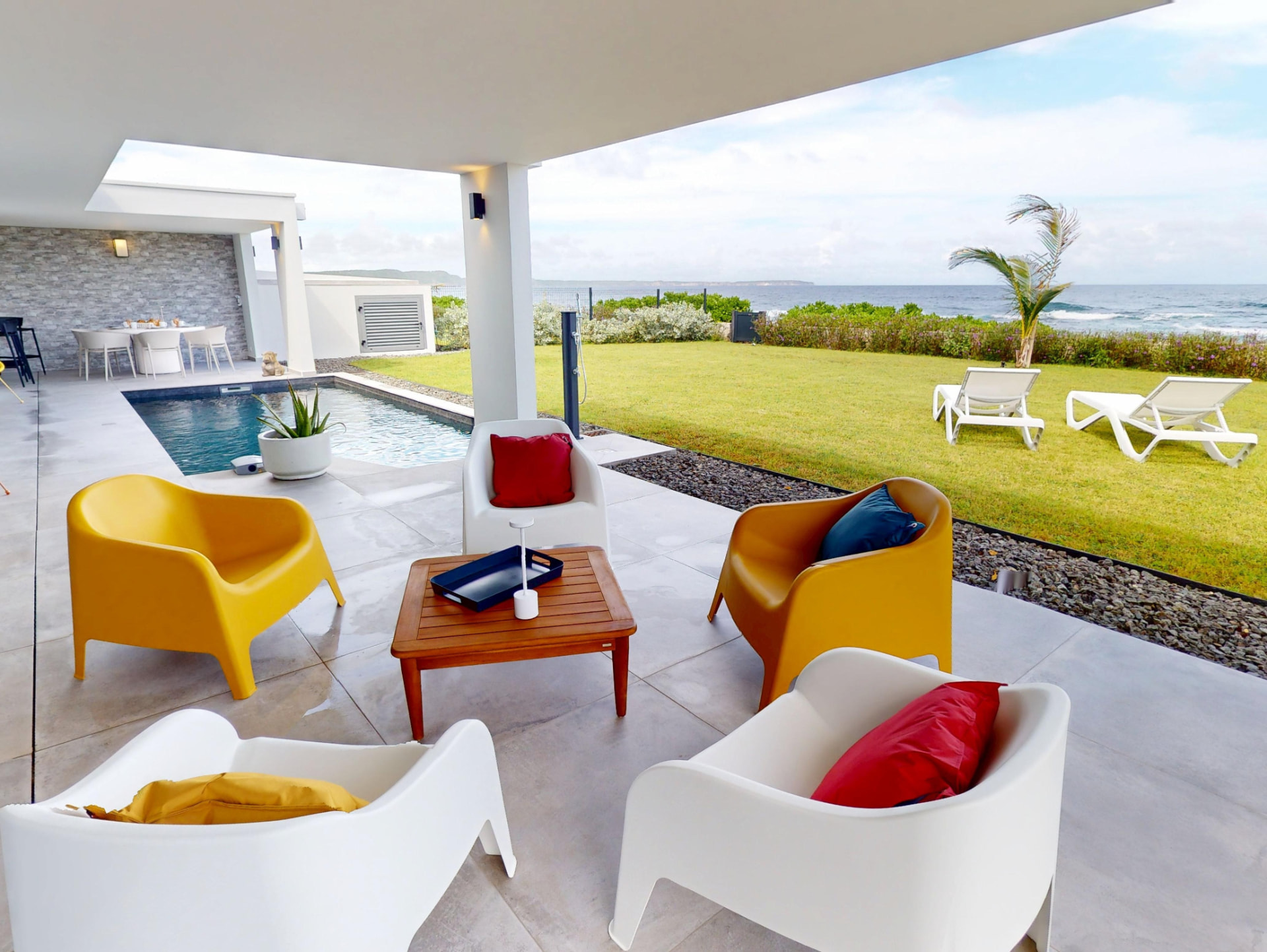
Returning to the same viewpoint several times creates a more personal series than a succession of sites: the shoreline, sky and reflections change with the light. If your accommodation has a view, make the most of it from a safe area where access is permitted. There’s no need to seek out a cliff or go close to the water to compose an interesting image.
The travelling photographer’s ethics
A few rules of good conduct: don’t disturb wildlife for a picture, respect protected areas and private property, and ask before photographing someone. A beautiful photograph taken without respect is never a beautiful photograph.
The minimum equipment to pack
There’s no need to weigh yourself down: for travel photography in Guadeloupe, a lightweight kit is more than enough. A recent smartphone covers most situations, especially landscapes in bright light. To go further, a mirrorless camera with two lenses — a versatile zoom and perhaps a fast prime lens for evenings — makes a compact and effective set-up. A small travel tripod is invaluable for sunrises and long exposures of the ocean.
Only three accessories really deserve the space: a polarising filter, which intensifies the blue of the lagoons and cuts through reflections on the water; spare batteries and memory cards, because the days are long; and a microfibre cloth, the ultimate weapon against humidity, sea spray and sand. The rest can stay at home.
Conclusion
Photographing Grande-Terre is first and foremost about learning to look: the morning light, the colour of a lagoon after rain, the silhouette of a fisherman in the harbour. With a little discipline over timing and a few simple habits, your images will tell the story of your trip just as well as your memories.
Checks before heading out
Access, weather and services can change. Check information with official organisations and the place concerned. A general description guarantees neither safe swimming, nor wildlife sightings, nor admission without a booking. Respect closures; do not pursue animals or walk on coral.
Stay in Grande-Terre
Our homes in Le Moule and Saint-François.