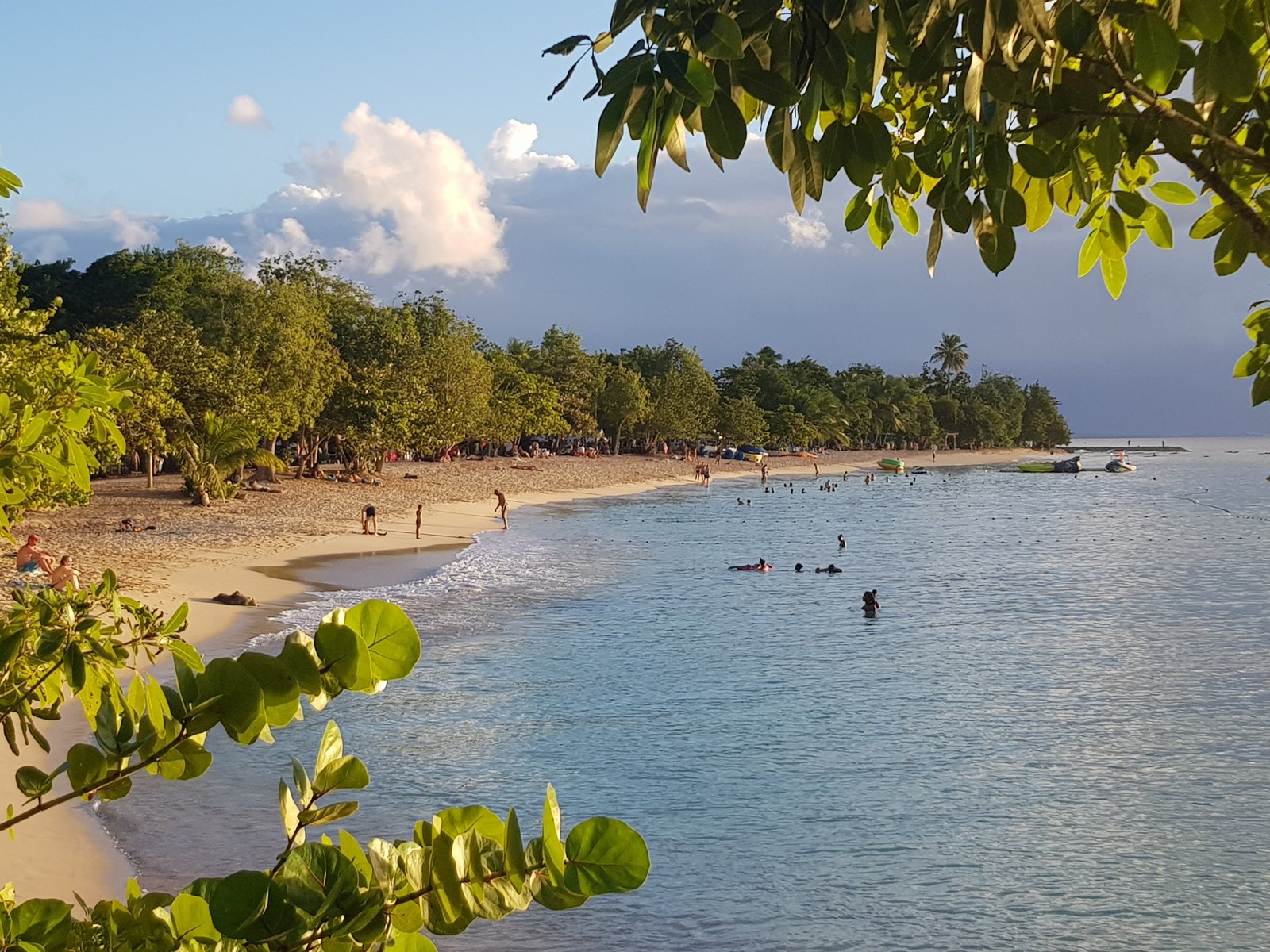
Generated illustration — not a depiction of a specific location
16 February 2026 · 4 min
Updated on 03/11/2026 · Original article: 26/01/2026
The date above follows the editorial calendar; the content was revised on the update date.
Anse Laborde and La Chapelle offer two perspectives on the Anse-Bertrand coastline: a cliff setting and fishing tradition at one, a name steeped in history and surfing at the other. An outing can focus on these differences without trying to see everything or enter the water. Here is how to choose your stop, observe the landscape and plan an additional visit in the town centre, distinguishing between visitor interest, access that is actually open and swimming conditions.
Two shores, two perspectives on Anse-Bertrand
Anse Laborde and La Chapelle belong to the same municipality, but their appeal goes beyond comparing sand. At Laborde, the setting between cliffs and the fishing tradition mentioned in the official description invite you to consider the relationship between the shore and human activity. At La Chapelle, the place name, its reported archaeological interest and the presence of surfing open up other avenues of discovery.
Choose your first stop according to your curiosity. Would you like to take in a coastal landscape, understand a name or watch a sporting activity? A clear intention lets you enjoy one place without treating the second as an obligatory stop. These differences help you plan a visit; they are neither a ranking of comfort nor an assessment of water safety.
Take time to read the story the coast tells
From an accessible area well away from the edges, look at how the beach fits into the terrain. An overall view lets you distinguish the opening to the sea, the rock faces and the areas covered by vegetation. A photograph becomes more interesting when it captures these relationships rather than framing the colour of the water tightly.
At La Chapelle, a name and a reference to archaeology may prompt questions without supporting every interpretation. Look for publicly available information or ask the tourist office for an explanation. An isolated stone is not proof of archaeological remains; a story you hear deserves to be put in the context of its source. Do not take any object away to identify later. As for surfing, watch the sequence of waves and the surfers’ movements from land: this observation describes an activity, not an invitation to enter the area.
Plan an enjoyable outing without entering the water
Imagine your day with swimming as a possibility rather than a condition for success. A walk along permitted paths, a stop to observe the surroundings and a break in the town centre already make a coherent outing in Anse-Bertrand. This approach is particularly suitable for groups with different interests: some take photographs, others admire the scenery or prefer a cultural discovery.
Before choosing two beaches, establish what the second would add. If you only want a different backdrop, it may be more enjoyable to spend longer at the first stop and leave time for the town centre. If you want to compare how the coastline is used, both stops make more sense, provided you confirm access to each separately.
Keep Grande Vigie in its proper role too: it is an additional scenic stop, not an alternative swimming option when the beaches are unsuitable. Hiking is a different undertaking again. By separating these intentions, you avoid turning a flexible seaside outing into a demanding circuit that no one really wanted.
Anse Laborde: a landscape between cliffs
The official tourism description outlines Anse Laborde’s coastal setting and fishing tradition. Take time to observe from permitted areas. Facilities mentioned in a listing are not guaranteed on the day you visit; in particular, confirm places to take a break and toilet facilities if these matter to your group.
La Chapelle: planning another coastal stop
The northern tourist office states that the beach’s name refers to a former chapel and mentions its archaeological interest. It also presents this shore as a surfing spot. Published information about facilities does not confirm their current availability; enquire about access and services before visiting. These features do not guarantee suitable swimming conditions.
Swimming: separate reputation from conditions
The official route sheet for Anse Laborde–Porte d’Enfer indicates unsupervised swimming areas. Check swell, currents, water quality notices and prohibitions. Do not rely solely on the presence of people in the water. If you are unsure, choose a walk along the shore rather than entering the water.
Combine stops without overloading your day
One beach and a break in the town centre may be enough. Grande Vigie adds a panoramic stop, but not an alternative place to swim. For a hike towards the cliffs, use a dedicated route sheet and check conditions; this beach guide does not describe a continuous route between all the sites.
Reference sources
Stay in Grande-Terre
Our homes in Le Moule and Saint-François.