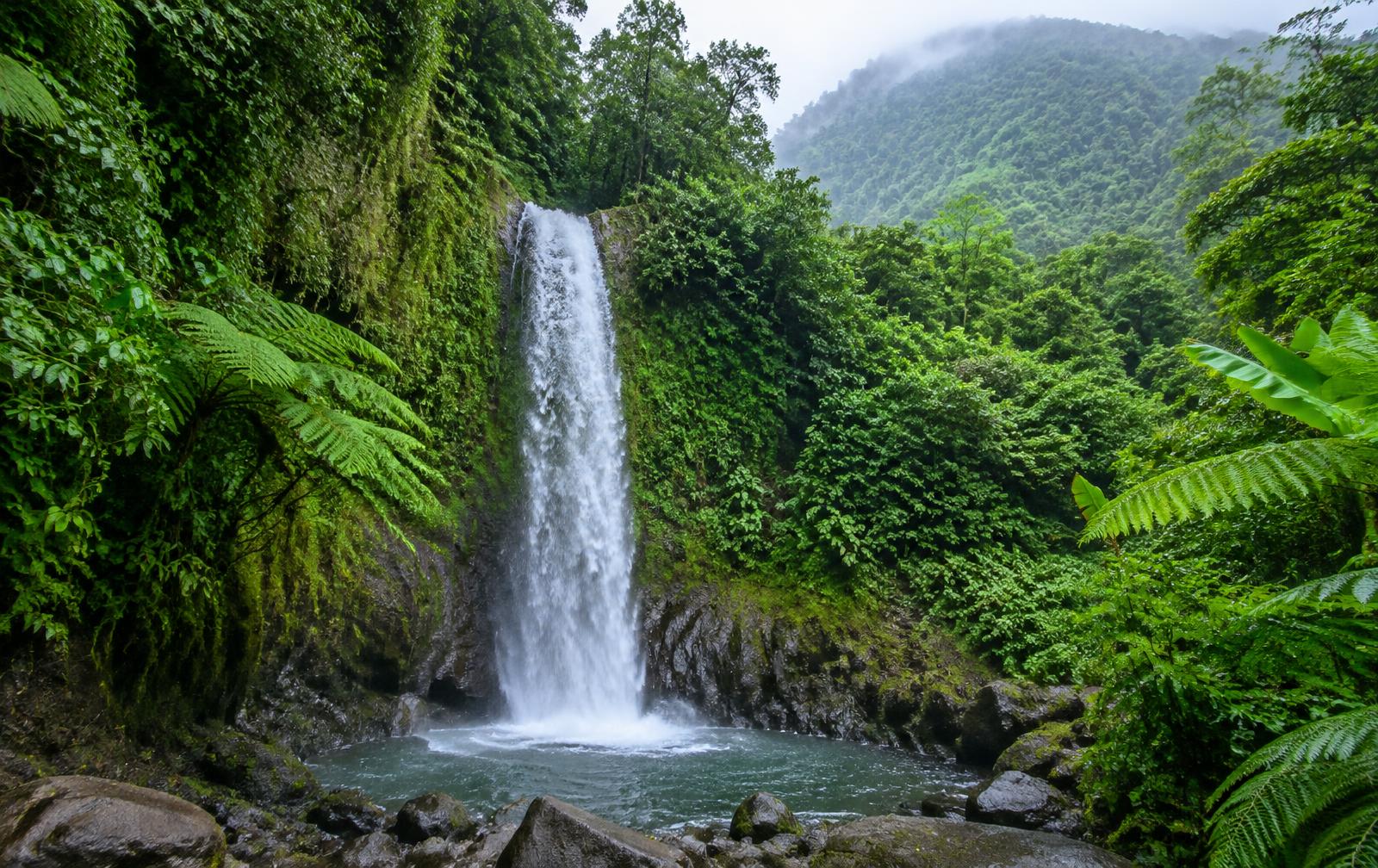
Generated illustration — not a depiction of a specific location
28 September 2026 · 5 min
Updated on 03/11/2026
The date above follows the editorial calendar; the content was revised on the update date.
Staying in Grande-Terre — in Le Moule or Saint-François, for example — without ever seeing Basse-Terre means knowing only half of the butterfly-shaped island. A volcano, tropical forest, waterfalls, winding roads: Guadeloupe’s other wing deserves at least a full day. Here is how to plan it with peace of mind.
Choose a theme: do not try to see everything
The first mistake would be to tick off ten stops in a day. Basse-Terre takes some effort: it is better to choose a theme and no more than two or three stops. Three types of day out:
- Nature and waterfalls day: the route de la Traversée through the national park, one or two accessible waterfalls, a picnic in the forest.
- Volcano day: for keen hikers, climbing La Soufrière requires a full day, good physical fitness and favourable weather — thorough preparation is essential.
- Caribbean coast day: the dark-sand beaches of the leeward coast, fishing villages, sunset over the Caribbean Sea.
Set off early, really early
The journey from Grande-Terre involves crossing Pointe-à-Pitre and its urban area, where traffic can be heavy at rush hour. Leaving early in the morning — at daybreak, which is easy in the tropics — makes all the difference: more leeway for the unexpected, though there is no guarantee of clear roads or an absence of crowds.
Plan the return journey in the same way: aim to reach your accommodation before nightfall, which comes early and quickly in the tropics.
Pack your day bag
A day in Basse-Terre calls for a carefully packed bag:
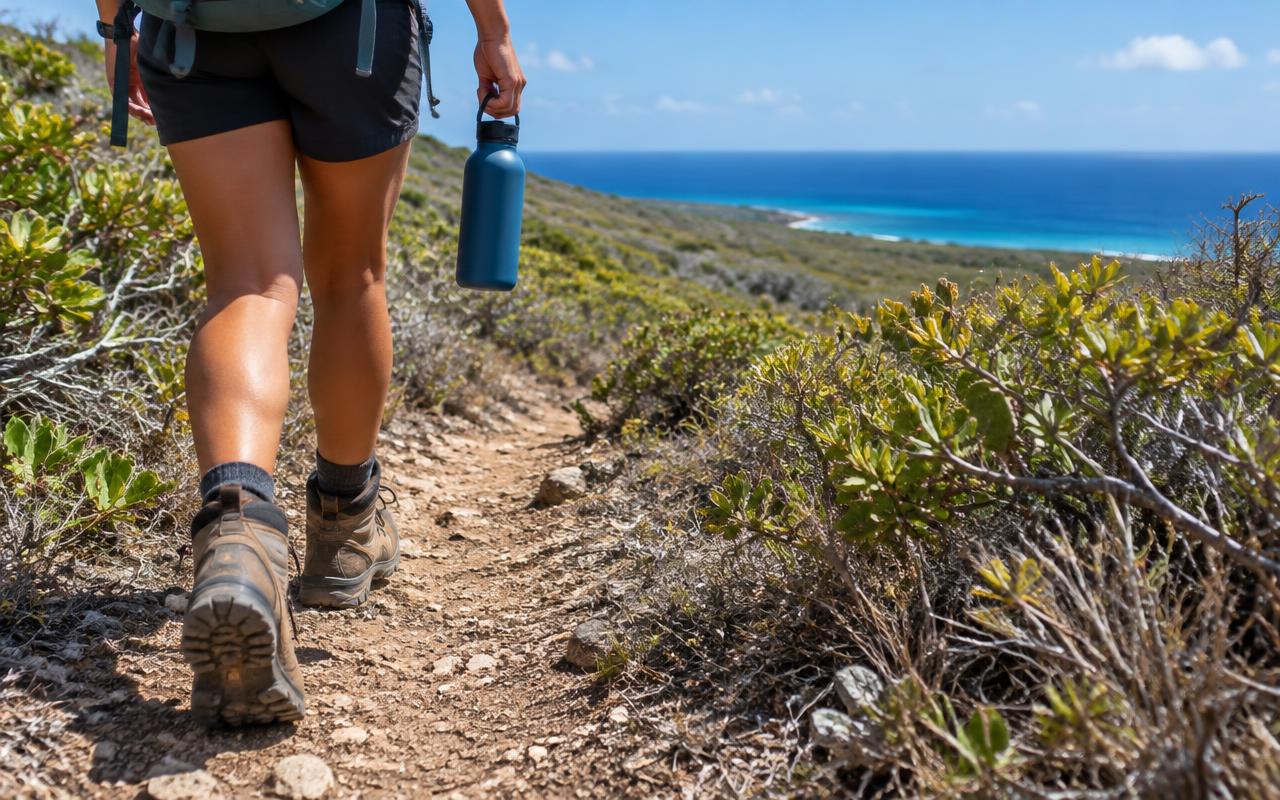
- Good walking shoes, even for the “easy” waterfalls: tropical trails are slippery.
- A waterproof jacket: the tropical forest thrives on rain, and showers are frequent.
- Protection against showers: only plan to swim if it is permitted at the site and conditions are suitable. After heavy rain, do not enter a pool or river.
- Plenty of water and a picnic: places to eat are scarce in the heart of the park.
- Mosquito repellent and sunscreen, both essential.
The route de la Traversée, an experience in itself
Linking Basse-Terre’s two coasts via the route de la Traversée is more than a journey: it is an immersion in the tropical forest. Tree ferns, lianas, birdsong — the road itself justifies the trip. Plan stops at viewpoints and designated visitor sites rather than driving straight through.
Adapt the trip to your group
With young children or older people, favour waterfalls accessible via short, maintained paths, and limit the day to two stops. With sporty teenagers, on the other hand, the day can be more physically demanding. The key is to choose an itinerary that the least physically able member of the group can enjoy.
A relaxed return
Plan the return journey too: tiredness, weather and traffic can change your plans. A fixed base in Grande-Terre saves you from repacking, but does not make all of Basse-Terre accessible without constraints. Keeping to one main discovery allows you to return without feeling obliged to add a final stop, and to savour what you have seen at your leisure.
What if the weather disrupts your plans?
In Basse-Terre, the weather often decides for you: La Soufrière’s summit shrouded in cloud, trails made slippery by rain, waterfalls best avoided after heavy showers. Rather than pressing on, have a plan B for each stop. An inaccessible waterfall can be replaced by a garden or a forest visitor centre; a volcano day that cannot go ahead can become another visit where access and conditions have been confirmed; a weather alert or persistent rain may mean abandoning travel altogether.
A useful habit: check forecasts and trail conditions that morning through official sources, and be willing to swap the order of your holiday days. Moving your Basse-Terre trip to the week’s best weather window is well worth the small effort of reorganising — that is precisely the advantage of a fixed base in Grande-Terre.
Conclusion
A day in Basse-Terre from Grande-Terre is one of the loveliest trips of your stay, provided you prepare for it: an early start, two or three chosen stops, a well-stocked bag and a return before nightfall. The reward is more than worth it: another side of Guadeloupe, green, wild and unforgettable.
Checks before heading out
Access, weather and services can change. Check information with official organisations and the venue concerned. A general description guarantees neither safe swimming, nor wildlife sightings, nor admission without a booking. Respect closures; do not pursue animals or walk on coral.
Stay in Grande-Terre
Our homes in Le Moule and Saint-François.